
BLOG POST
What To Do When Your Hardwood Floors Get Water Damaged?
Water and hardwood floors are not a good combination. Whether it’s a burst pipe, an overflowed dishwasher, or a basement flood after a St. Louis storm, the next few hours matter more than most homeowners realize. The right moves early on can save your floors. The wrong ones or no moves at all can turn a repairable situation into a full replacement. So what to do when hardwood floors get water damaged?
We’ve been restoring water-damaged hardwood floors in the St. Louis area since 2004. This guide walks you through exactly what to do, how to read the damage, and how to decide whether repair or replacement makes sense for your situation.
Time is your biggest variable
Hardwood can begin warping within hours of exposure. Mold can establish itself in 24–48 hours. The faster you act after discovering water, the more options you have.
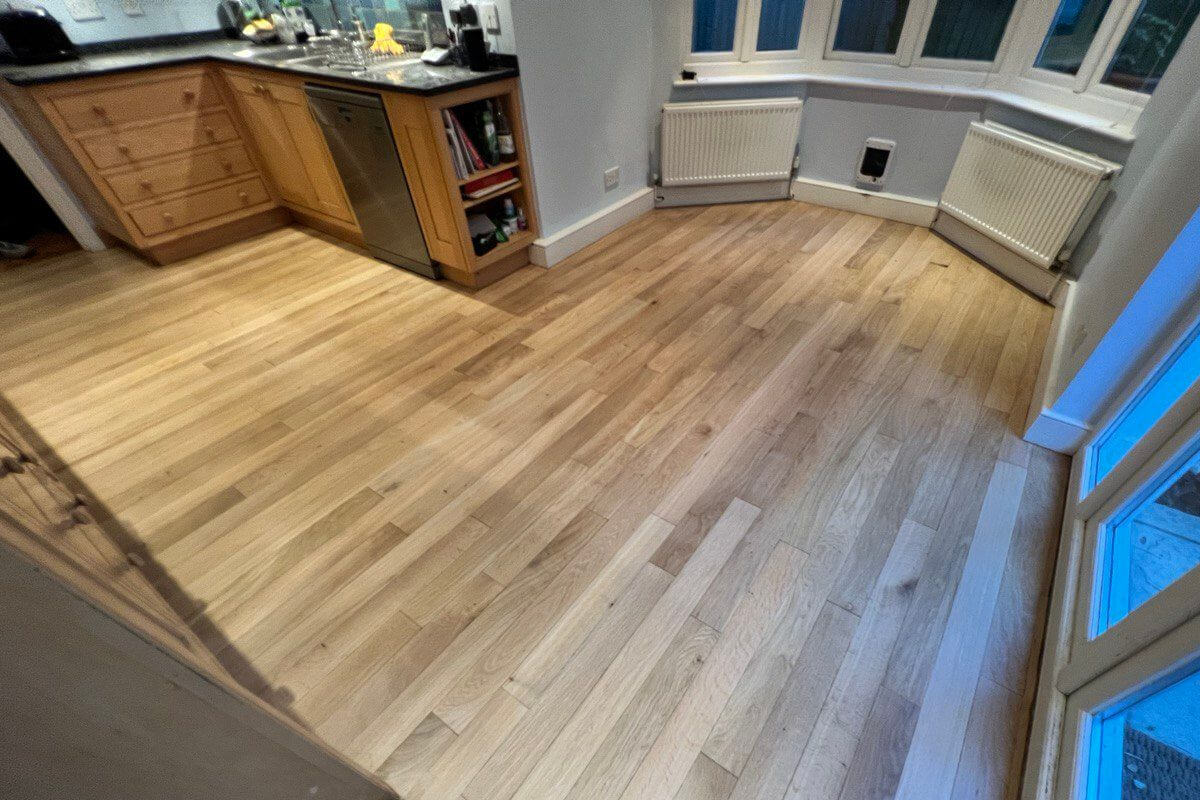
Step 1: Stop the source before you do anything else
Before you grab a mop or start pulling up boards, make sure water is no longer entering the space. Check for the obvious sources: a running appliance, a broken supply line, an open window during rain. If it’s a plumbing failure and you can’t locate the shutoff, turn off your home’s main water supply.
If there’s any chance the flooded area touches an electrical panel, outlet, or hardwired appliance, cut the power to that circuit or the whole floor before stepping in.
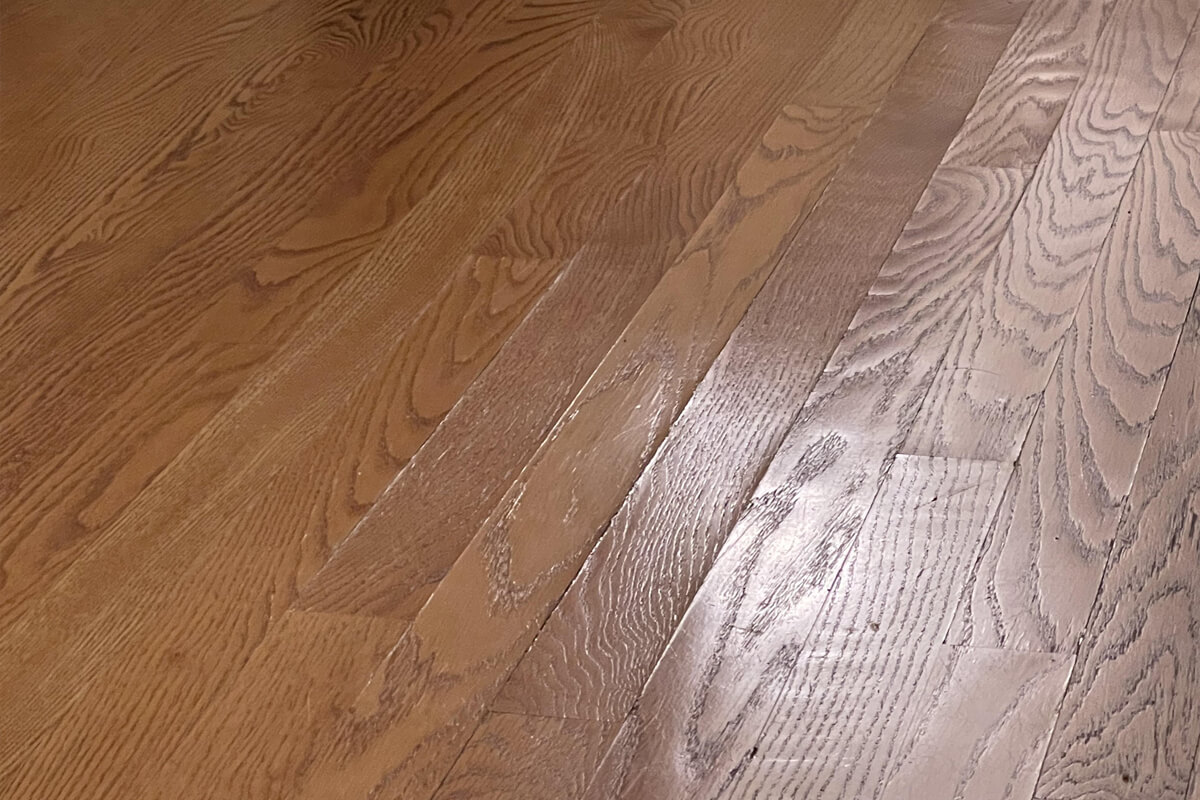
Step 2: Remove standing water immediately
Wet/dry vacuum
The single most useful tool you can have. It pulls water from the surface without soaking mops further into the wood grain.
Buckets and towels
For anything the vac can't reach, especially along walls, under toe kicks, and inside closets.
Move furniture off the floor
Every piece of furniture sitting on wet wood is trapping moisture underneath it. Get it off the floor or place it on blocks.
Pull rugs and mats immediately
They hold tremendous amounts of water and will continue releasing it into the floor for hours.
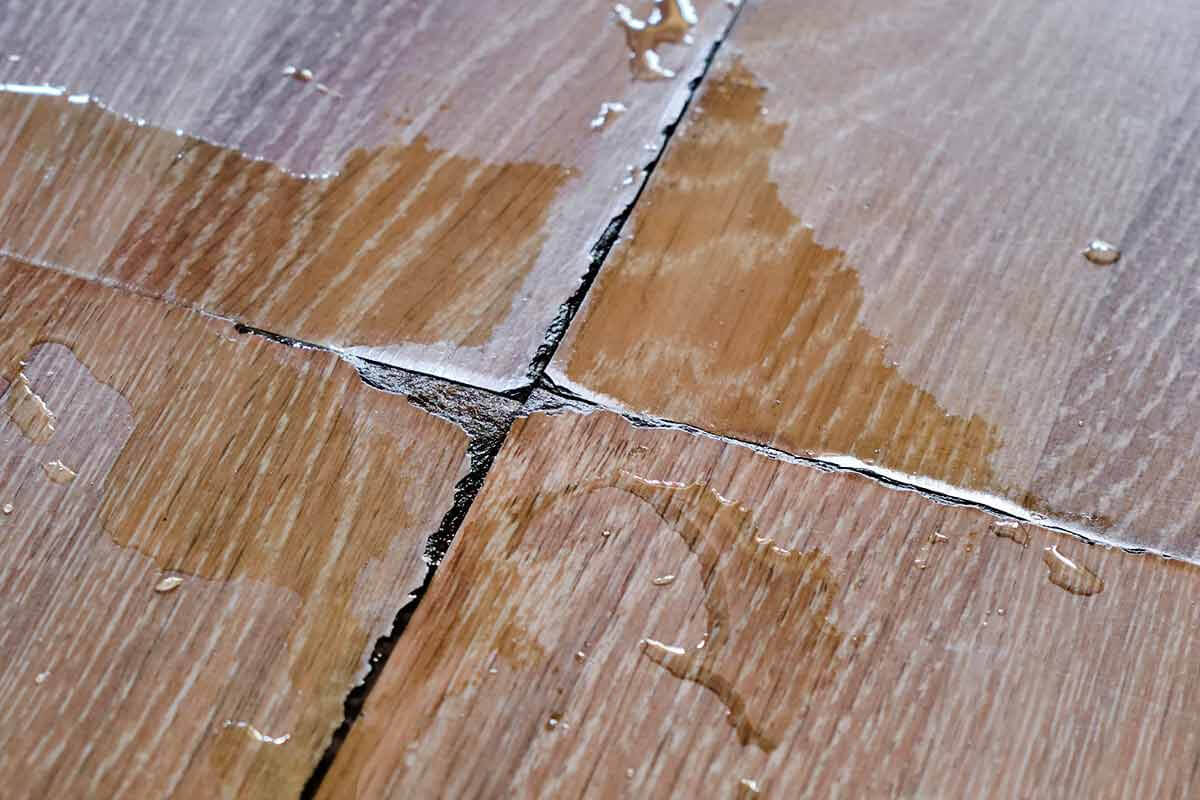
Step 3: Dry the floor as fast as possible
Run a dehumidifier continuously in the affected room.
This is the most effective tool for pulling moisture from the air and slowing absorption deeper into the wood.
Point fans directly at the floor
Box fans at floor level, not ceiling fans. Airflow across the surface accelerates evaporation.
Open windows if weather allows
Dry outdoor air helps, but don't open them on humid St. Louis summer days; you'll make it worse.
Do not use heat guns or high-heat methods
Rapid heat causes wood to crack and split. Let the process happen at room temperature.
Pro tip: Drying a flooded hardwood floor properly takes 3–7 days in most cases. Checking it after 24 hours and assuming it’s fine is one of the most common mistakes we see. Hire a moisture meter if you want certainty, they’re available at any hardware store and measure moisture content inside the wood.
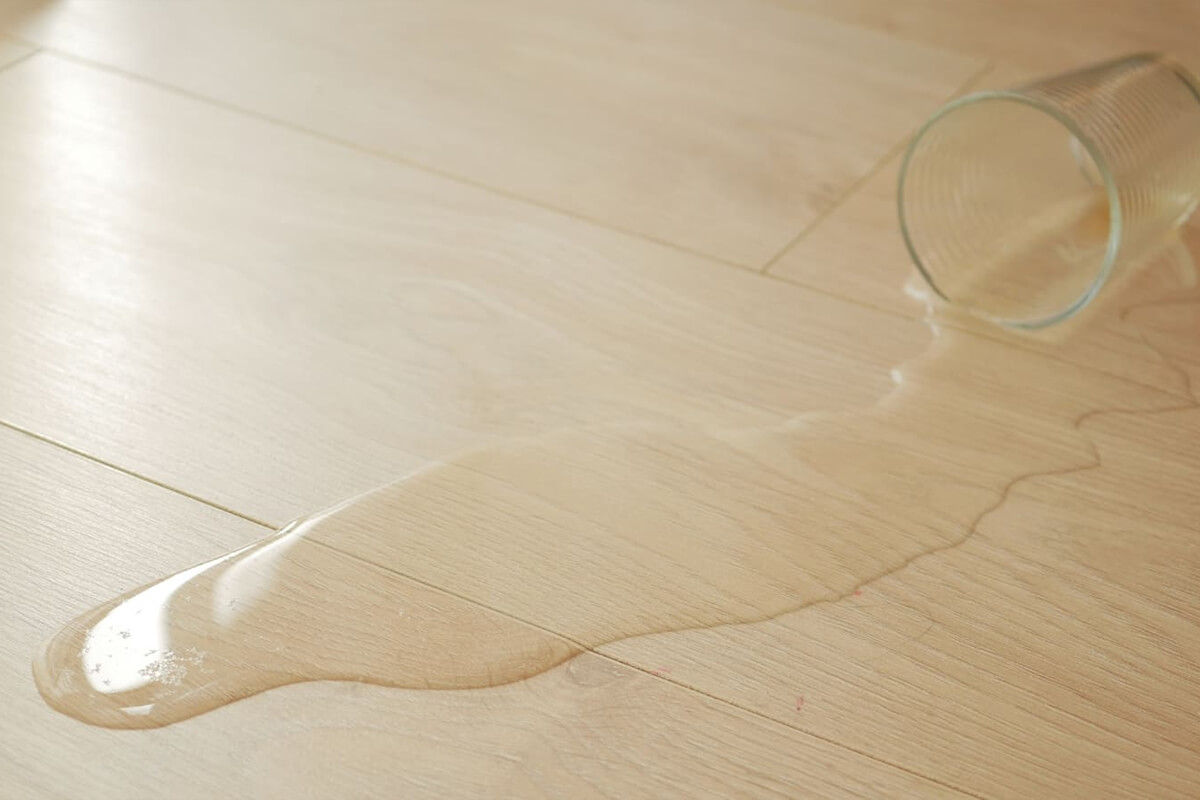
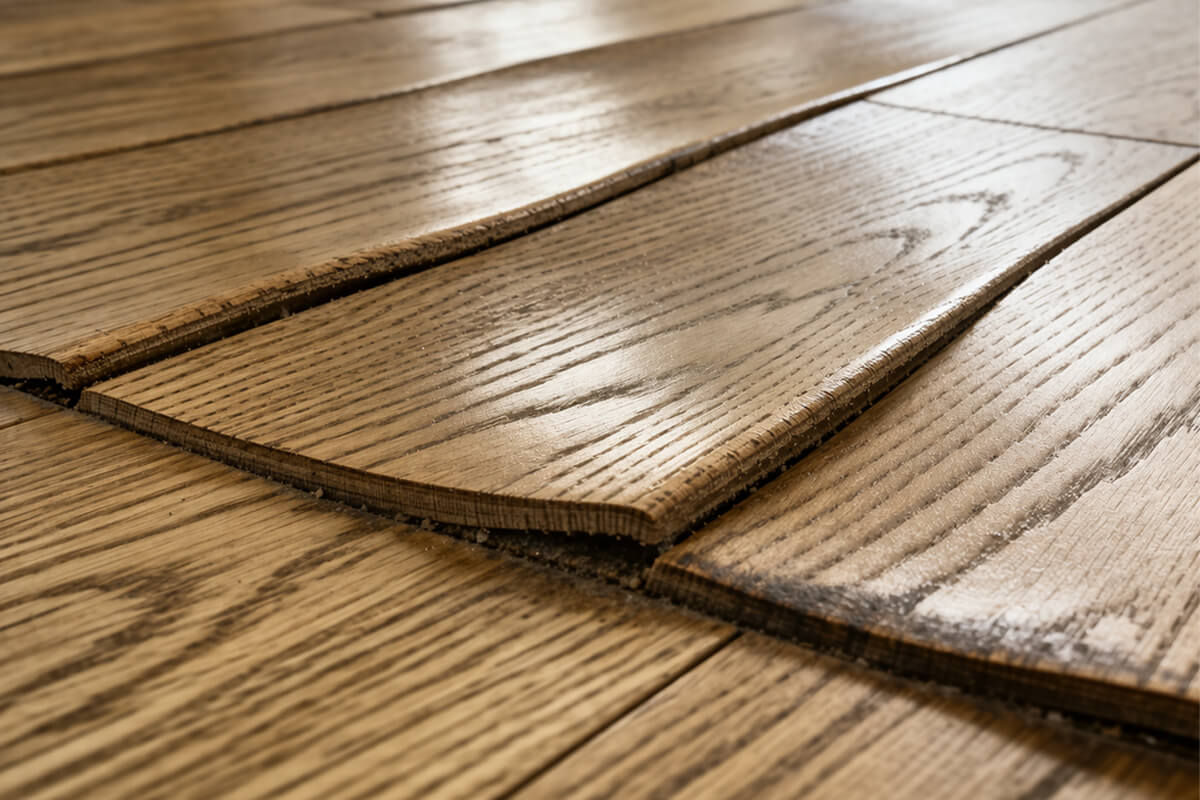
Step 4: Read the damage and see what the floor is telling you
Once the floor has dried for at least 48–72 hours, do a careful inspection. The signs you find and where you find them, tell you a great deal about whether repair is viable.
Cupping
Edges of boards higher than the center. Common sign of moisture imbalance. Often reversible if caught early.
Crowning
Center of boards higher than edges. Usually appears after drying too fast, or from previous cupping that was sanded prematurely.
Buckling
Boards lifting entirely off the subfloor. More serious, indicates significant moisture and often subfloor involvement.
Dark staining
Black or dark gray patches in the wood grain. Can indicate mineral deposits, iron oxidation, or early mold, needs close inspection.
White haze
Moisture trapped in the finish layer, not yet in the wood. Often the most treatable form of water damage.
Check the subfloor, not just the surface
Press down firmly at multiple points across the floor. If you feel soft or spongy spots, water has penetrated the subfloor. This changes the repair calculus significantly and should be assessed by a professional before any flooring work begins.
Should you repair, refinish, or replace your floor?
This is the question every St. Louis homeowner faces after water damage, and the honest answer depends on four things: how long the water sat, how deep it penetrated, whether mold is present, and the condition of the subfloor. Here’s how to read each scenario.
| What You See | Water Exposure | Subfloor | Likely Path | Verdict |
|---|---|---|---|---|
| White haze or surface staining only | Under 2 hours | Dry and solid | Light buff and refinish | Repair |
| Mild cupping, no staining | 2–12 hours | Dry and solid | Dry fully, then sand and refinish | Repair |
| Moderate cupping or crowning with some staining | 12–48 hours | Possibly damp | Professional assessment; likely sand & refinish | Assess first |
| Buckling, dark staining, separated boards | 48+ hours | Suspect | Board replacement + possible subfloor repair | Partial replace |
| Visible mold, widespread buckling, soft spots | 48+ hours | Compromised | Full tear-out; mold remediation; new install | Replace |
| Musty odor persists after full drying | Any | Unknown | Professional moisture testing before any work | Assess first |

When repair is a realistic option for St. Louis hardwood floors
Solid hardwood has one major advantage over laminate, vinyl, and engineered flooring when it comes to water damage: it can be sanded. That means surface-level damage, staining, mild warping, finish clouding, can often be removed and the floor brought back to its original condition, or better.
Repair makes the most sense when the boards themselves are structurally intact after drying. If you can press the floor and it feels solid everywhere, and if the boards have come back mostly flat (cupping often resolves naturally once moisture levels equalize), a professional sand-and-refinish is usually a fraction of the cost of replacement.
Good candidates for repair and refinishing
Floors with surface staining, light cupping, white haze in the finish, or a few localized dark spots. If the floor is structurally sound and the subfloor is dry, refinishing can completely restore the appearance and add a protective layer against future damage.
Let's talk about your floor
Contact our team and we’ll walk your space, assess your subfloor, and give you a detailed estimate with options, no obligation.
When replacement is the honest answer
Some situations are beyond what sanding and refinishing can fix. If mold has established itself in the wood or subfloor, the contaminated material has to come out, there’s no finish that seals over an active mold colony. If boards have buckled severely and dried in a distorted position, they won’t sand flat. And if the subfloor has delaminated or softened, no flooring installation on top of it will hold long-term.
Partial replacement, pulling the damaged boards and weaving in new ones, is also a legitimate middle path for localized damage. In St. Louis homes with strip oak flooring (common in houses built between 1900 and 1960), a skilled installer can weave new boards into the existing pattern and stain-match them so the repair is nearly invisible.

How to prevent future water damage to your floors?
The best repair is the one you never need. A few habits can dramatically reduce your risk in a St. Louis home, where summer humidity and heavy storms are a regular reality.
Check appliances annually
Dishwashers, refrigerators with ice makers, and washing machines are the leading source of slow leaks that damage floors before anyone notices.
Control indoor humidity
Keep your home between 35–55% relative humidity year-round. Hardwood expands and contracts with humidity swings; extreme dryness in winter and high humidity in summer both stress the floor.
Use area rugs strategically
Near sinks, at entries, and in front of pet water bowls. Change them regularly and make sure they're not trapping moisture underneath.
Re-coat your floors every 5–7 years
A well-maintained finish is your first line of defense. Once the finish wears through, water reaches bare wood almost instantly.

When to call a St. Louis flooring professional
There’s a meaningful amount you can handle yourself in the first hours, stopping the water, extracting standing water, getting fans and dehumidifiers running. But there are situations where a professional assessment is the right call before you do anything further.
Call a professional when mold is visible or you can smell it; soft spots appear anywhere on the floor; water has been sitting for more than 24 hours; the damage covers a large area; or you simply aren’t sure whether repair or replacement makes more sense financially.
A professional moisture reading and in-person assessment costs nothing compared to making the wrong call on a floor worth saving or worse, sealing a mold problem under a new finish.