BLOG POST
How Much Does Tile Repair Cost in St. Louis?(2026)
A cracked tile isn’t just an eyesore, it’s a water entry point. In a St. Louis bathroom or shower, moisture behind a tile can quietly rot the substrate, grow mold, and turn a $300 repair into a $3,000 gut job. Acting fast is almost always cheaper than waiting. So the question is: how much does tile repair cost in St. Louis?
This guide combines national cost data with St. Louis-specific pricing trends, plus the field experience of a third-generation flooring family that has repaired and refinished floors across the metro, from Clayton and Ladue to Webster Groves and the Hill. Take in consideration that these prices work as reference and not exact prices as there are a lot of variables to analyze before knowing the exact price. If you want a exact quotation and pricing, you can ask it in here.
St. Louis note: Labor rates here tend to run slightly below the national average. Expect St. Louis tile contractors to charge $55–$90/hr vs. the national $60–$100/hr range. Historic homes (pre-1950) in neighborhoods like Lafayette Square and Central West End often carry a modest premium due to non-standard substrates and matching challenges.
St. Louis tile repair costs by repair type
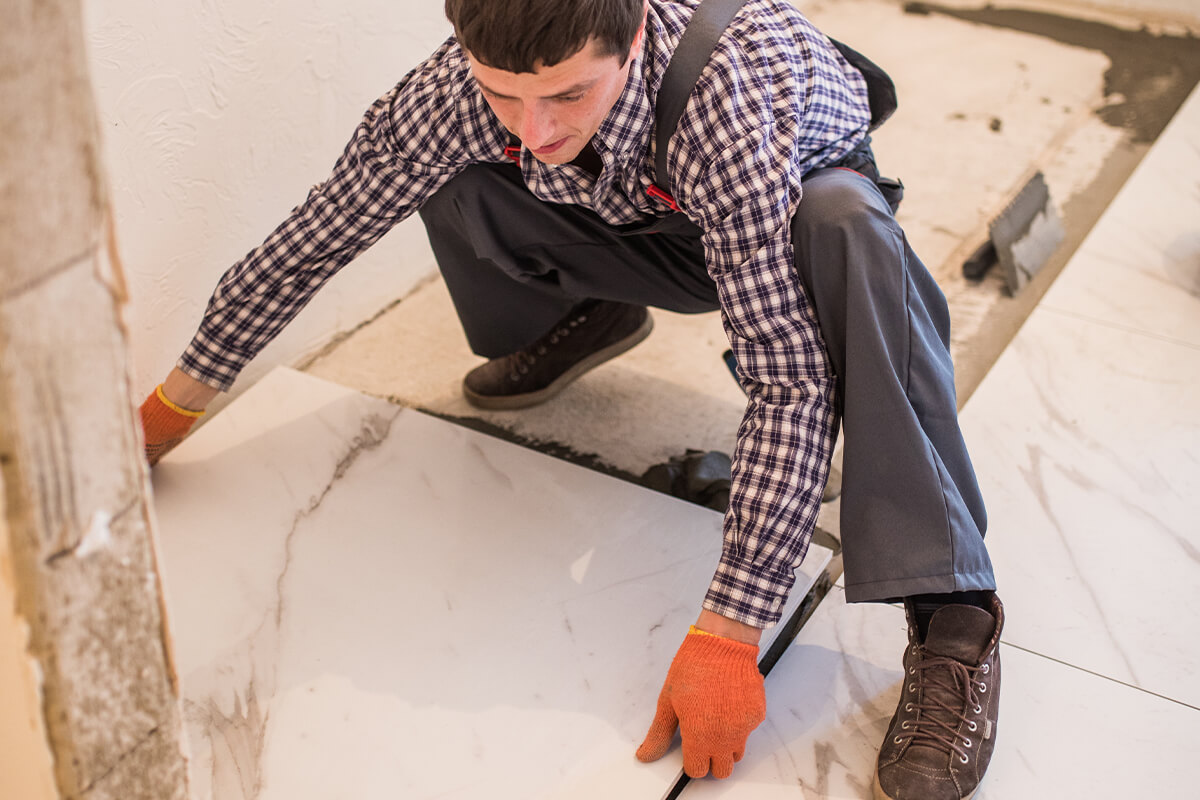
Most tile repair jobs in St. Louis fall between $280 and $662, with a local average around $466. Small DIY fixes can run as little as $10–$30. Complex shower or water-damage work climbs to $1,500–$3,500.
| Repair type | St. Louis cost | DIY? | Urgency | Notes |
|---|---|---|---|---|
| Hairline crack (ceramic / porcelain) | $10–$300 | Yes | Low – monitor | Epoxy kit works on dry floor tile |
| Chip or hole | $50–$400 | Yes (small) | Low | Color-matched filler kits available |
| Single tile replacement | $130–$500 | With skill | Medium | Matching spare tiles critical |
| Grout spot repair | $200–$400 | Floors only | Medium | Remove old grout fully first |
| Loose / tenting tiles | $120–$500 | No | High – water risk | Active infiltration point; find cause first |
| Full shower regrouting | $450–$2,000 | No | High | Waterproof membrane must be verified |
| Water damage behind tiles | $1,500–$3,500 | No | Emergency | Substrate, membrane, mold all assessed |
| Tile reglazing | $300–$1,200 | No | Cosmetic | Good option for discolored but intact tile |
Let's talk about your floor
Contact our team and we’ll walk your space, assess your subfloor, and give you a detailed estimate with options, no obligation.
Cost by tile material
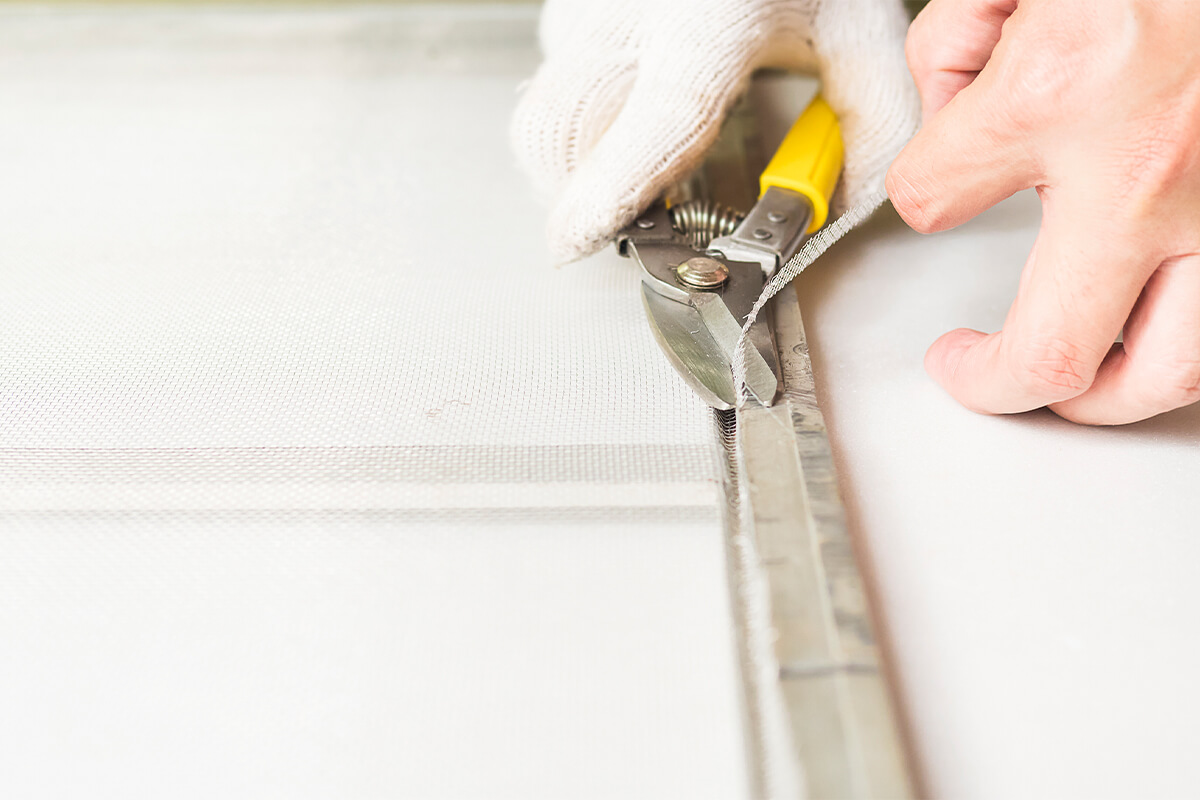
The type of tile you have is a major cost driver. Ceramic and porcelain are affordable, widely available, and easy to match. Natural stone requires specialist handling, custom matching, and mandatory sealing.
- Ceramic: $1–$15/sq ft (Materials only)
- Porcelain: $2–$15/sq ft (Harder to cut)
- Slate: $2–$28/sq ft (Wide price range)
- Granite: $5–$14/sq ft (Specialist needed)
- Marble: $8–$40/sq ft (Never DIY)
- Mosaic: Varies (High labor cost)
Natural stone rule: Never use generic cleaning agents, wrong-pH sealants, or standard grout on marble, granite, or slate. The wrong product permanently etches or stains the surface. Always hire a specialist for natural stone tile repair in St. Louis.
Cost by location in your home
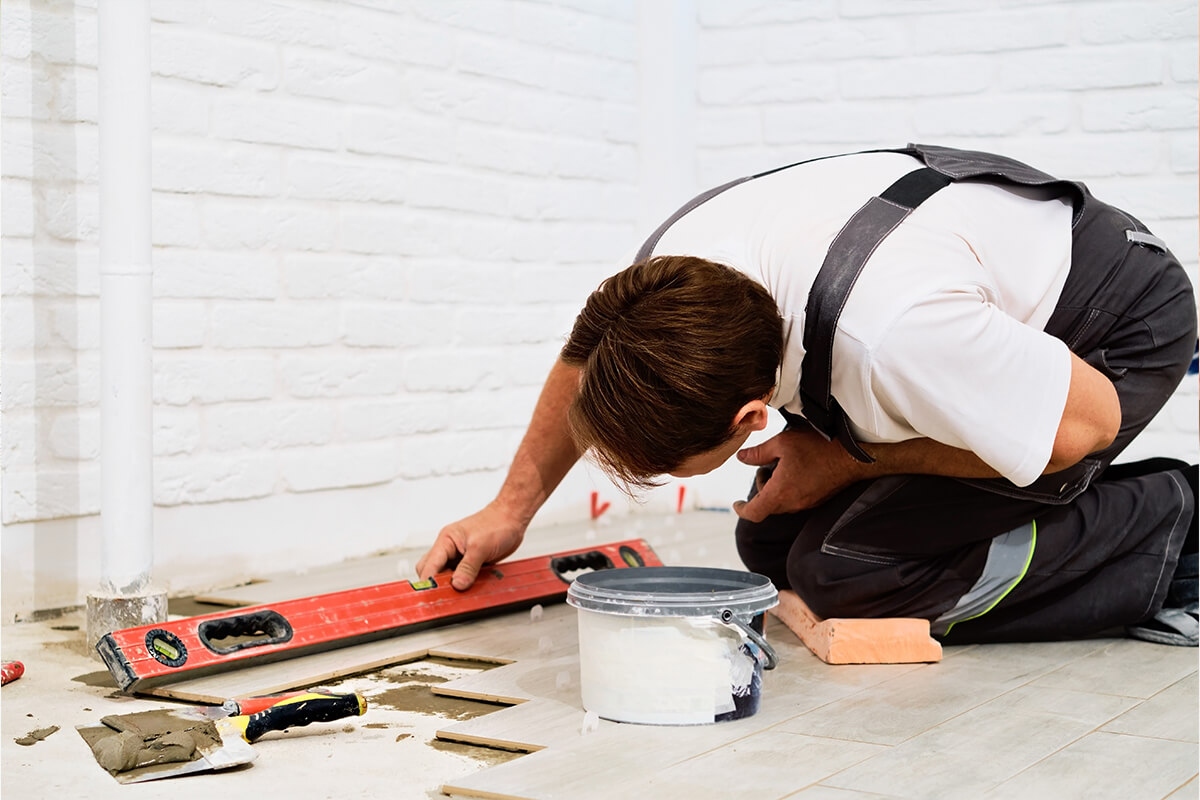
| Location | Typical St. Louis cost | Why it varies |
|---|---|---|
| Bathroom floor | $100–$500 | Standard access, easier matching, lower water stakes than shower |
| Shower walls | $200–$1,500 | Waterproofing verification required on every tile removal |
| Kitchen floor | $50–$700 | High traffic accelerates grout cracking; larger areas common |
| Kitchen backsplash | $150–$600 | Smaller area but detailed tile matching and edge work |
| Outdoor / pool tile | $75–$250 per section | Missouri freeze-thaw cycles worsen damage fast; frost-rated tile required |
| Entryway / foyer | $100–$400 | High visibility — matching quality matters most here |
St. Louis winters matter: Missouri's freeze-thaw cycles are hard on outdoor tile and pool tile. Water trapped in grout cracks expands when it freezes, widening cracks rapidly. Inspect outdoor tile every fall, a $100 resealing prevents a $500 repair.
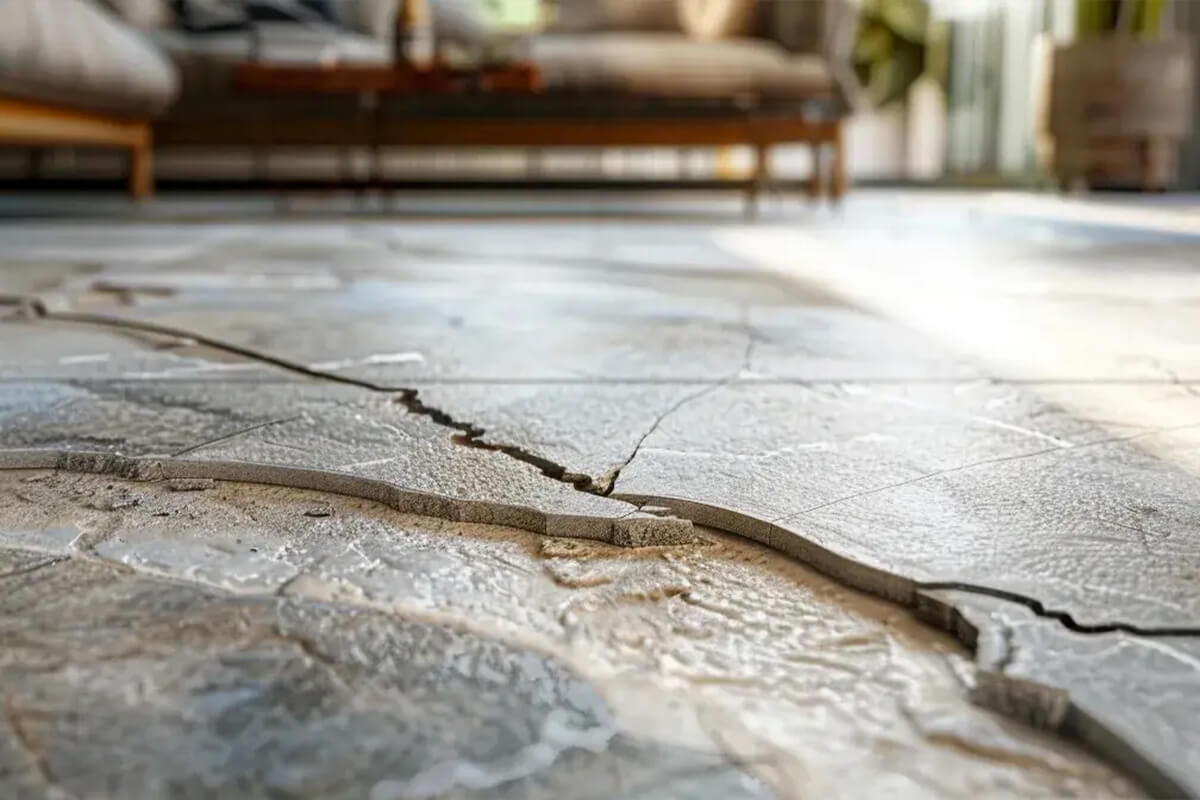
Is it better to repair or replace tile?
This is the question most St. Louis homeowners get wrong by defaulting to repair when replacement is actually the cleaner and more cost-effective long-term answer or vice versa. Use this framework to decide.
Repair when:
- Damage is limited to 1–3 tiles
- You have matching spare tiles
- No hollow sound when tapped
- No musty smell from the wall
- Grout is intact around the crack
- Crack came from a single impact
- No water behind the substrate
- The tile is rare or discontinued
Replace when:
- Multiple tiles cracking or loose
- Hollow sound across wide area
- Water damage confirmed behind tile
- Waterproof membrane is compromised
- Grout failing repeatedly in same spot
- Matching tiles unavailable
- Cracks spreading without clear cause
- Planning a broader renovation anyway
The most expensive mistake St. Louis homeowners make is treating a crack as purely cosmetic. A hairline crack that costs $200 to repair today can become a $1,500-$3,500 job within 6-18 months if water is quietly reaching the substrate behind it. Every crack in a wet area is a potential water entry point until proven otherwise.
Let's talk about your floor
Contact our team and we’ll walk your space, assess your subfloor, and give you a detailed estimate with options, no obligation.

What are the best tile types for St. Louis homes
Not all tiles are equally suited to Missouri’s climate and St. Louis’s older housing stock. Here’s how the most common options compare for local conditions.
| Tile type | Best for | St. Louis suitability | Repair ease | Lifespan | Cost / sq ft |
|---|---|---|---|---|---|
| Porcelain | Bathrooms, floors, outdoors | Excellent | Moderate – hard to cut | 50+ years | $3–$10 |
| Ceramic | Walls, backsplashes, dry floors | Excellent | Easy | 20–50 years | $1–$15 |
| LVT (Luxury Vinyl Tile) | Basements, high-moisture areas | Very good | Very easy | 15–25 years | $2–$7 |
| Natural stone | Luxury bathrooms, entryways | Indoor only | Specialist required | 75+ years | $10–$25 |
| Slate | Rustic interiors, hearths | Good | Moderate | 100+ years | $2–$28 |
| Cement / encaustic | Historic St. Louis homes | Good – with care | Very difficult | 50+ years | $8–$25 |
Historic St. Louis homes: Many pre-1950 homes in Lafayette Square, Tower Grove, and the Hill have original encaustic cement tile or small-format mosaic tile. These are worth preserving. Classic Flooring Solutions specializes in weave-in repairs and historic-pattern matching for these older floors, matching tiles that most contractors can't source.

Warning signs you shouldn't ignore
Knowing when a tile problem is cosmetic vs. structural can save thousands. Here are the signals that a professional inspection is non-negotiable.
Hollow sound when tapped
Tiles that were previously solid and now sound hollow have de-bonded from the substrate. This is an active water infiltration risk, especially in showers and bathroom floors.
Musty smell from the wall or floor
A persistent musty odor near tiled surfaces usually means moisture has already reached the substrate. Mold can begin growing within 24–48 hours of water contact with drywall.
Grout failing repeatedly in the same spot
If you've had grout repaired in the same area more than once, there's a structural cause underneath, usually movement in the substrate, a missing expansion joint, or ongoing water infiltration.
Tiles that feel soft or flex when pressed
Any give underfoot or when you press a wall tile is a serious warning. It means the substrate is compromised like wet drywall, rotted cement board, or a failed waterproof membrane.
Cracks spreading without a clear cause
Impact cracks stay localized. Cracks that spread across multiple tiles, or appear without any dropped object, usually indicate substrate movement.

Frequently asked questions
What is the average tile repair cost in St. Louis in 2026?
Most St. Louis tile repairs fall between $280 and $662, with a local average around $466. Small DIY epoxy repairs for chips or hairline cracks on ceramic tile cost $10-$30. Shower or water-damage work runs $1,500-$3,500+. St. Louis labor rates run slightly below the national average at $55-$90/hr vs. $60-$100 nationally.
Can I repair a cracked tile myself?
For small cracks and chips on ceramic or porcelain floor tile, yes, a two-part epoxy kit ($10-$30) works well. Avoid DIY for: shower tiles (waterproofing must be verified), natural stone tile, any tile showing hollow sound or water damage behind it, or cracks that are spreading.
How much does grout repair cost in St. Louis?
Spot grout repairs cost $200-$400 for small areas. Full shower regrouting runs $450-$2,000 in St. Louis (national average $1,500). Never apply new grout over old grout - the old material must be fully removed first with an oscillating tool. Grout sealing costs $0.50–$1.50/sq ft in materials and should be done annually in shower and wet areas.
How much does grout repair cost in St. Louis?
Four signals: (1) tiles that previously felt solid now sound hollow when tapped gently, (2) a musty smell near tiled walls or floors, (3) grout that cracks or fails repeatedly in the same spot, (4) any tile that flexes slightly when pressed. If you notice any of these, call a professional.
Is it cheaper to repair or replace tile?
Repair is cheaper for isolated damage (1–3 tiles) with matching spares available and no water infiltration. Replacement becomes the smarter long-term answer when multiple tiles are failing, matching tile is unavailable, or water damage is confirmed.
What tile works best in St. Louis's climate?
For indoor use, porcelain is the top choice - dense, frost-resistant, and nearly impervious to moisture. Ceramic is excellent for walls and low-moisture floors. For outdoor tile and pool areas, only use frost-rated porcelain with a coefficient of friction (COF) rating of 0.6+ - Missouri's freeze-thaw cycles rapidly destroy unsuitable tile.