
BLOG POST
How to Match Original Strip Oak Flooring in Your Home?
Maybe you found original oak under old carpet, or a wall came out and left a gap in the floor. Either way, the question is the same: how do you match original strip oak flooring so new boards blend into century-old ones? It can be done, but it takes more than a trip to the flooring store.
This guide walks you through the whole process. You will learn how to identify the strip oak in your home, where matching boards come from, and when to repair, refinish or replace. We also cover how to care for the floor afterward. The advice comes from our work in historic hardwood floor restoration in St. Louis, where 1890–1940 strip oak runs through many of the city’s older homes.

What is historic strip oak flooring?
Strip oak is solid oak flooring milled into narrow boards, usually under 3 inches wide. Between about 1890 and 1940 it went into nearly every St. Louis home built or updated in that era. Most of it is 2 1/4 inches wide and 25/32 inch thick, tongue-and-groove on the sides and ends. Some homes from the 1920s and 1930s have a thinner 3/8-inch strip, face-nailed over an older floor.
Before anyone can match your floor, five things have to be identified. Here is how we check each one.
| What We Check | How to Tell | Why It Matters |
|---|---|---|
| Species | Red oak has a pinkish tone and open pores on the end grain. White oak runs tan to olive, with closed pores. | Red and white oak take stain and age differently. |
| Cut | Plain-sawn shows arching “cathedral” grain. Quartersawn shows straight lines and shimmering ray flecks. | Quartersawn white oak was common in foyers and dining rooms. It needs quartersawn stock to match. |
| Face width | Measure several boards. 1 1/2, 2 and 2 1/4 inches are the usual sizes. | A 1/8-inch difference shows across a room. |
| Thickness | Look at a floor register opening or a threshold edge. | Sets whether new boards sit flush and how much sanding the floor has left. |
| Grade | Front rooms often have clear, knot-free boards. Bedrooms and upstairs often have more character. | Mixing grades reads as a patch. |

Is original strip oak worth saving? Pros and Cons
In most homes we see, yes. The oak in a century home came from old-growth trees. It has tighter growth rings and denser wood than most oak cut today, and a hundred years of light has given it a warm amber tone no stain fully recreates.
The best parts:
- Durability: A 25/32-inch floor can usually be sanded and refinished several more times.
- Character: Patina, tight grain and hand-laid patterns add real value to a historic home.
- Stability: Narrow boards move less with St. Louis humidity swings than wide planks.
The hard parts: - Seasonal gaps: Expect small gaps in winter when the heat runs. That is normal, not failure.
- Hidden history: Old finishes and nearby paint can contain lead, so testing comes before sanding.
- Limited sanding on thin strip: A 3/8-inch overlay floor has far fewer refinishes left than a full-thickness one.
- Matching takes skill: Off-the-shelf boards rarely blend without work.
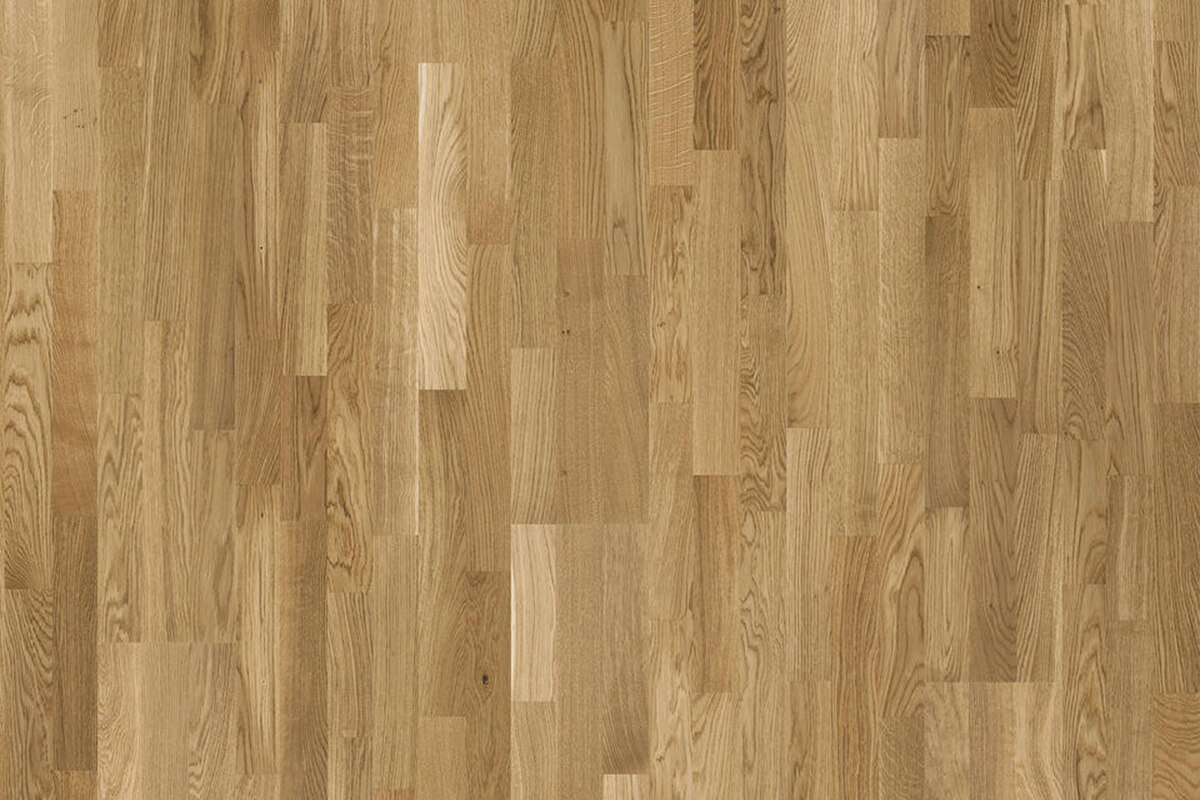
Why won't new or 3-strip flooring match your original oak?
Standard new strip flooring comes close on paper. Modern 3/4-inch boards are about 1/32 inch thinner than old 25/32-inch stock, the tongue can sit at a different height, and most prefinished boards have small beveled edges your original floor does not. New oak also comes from younger trees, so the grain looks wider and the color reads pink or pale next to aged oak.
Engineered “3-strip” planks are a different product entirely. They are wide boards made to look like three narrow strips side by side. The fake seams run in a fixed pattern that never lines up with the random joints of a real strip floor. The wood also moves differently from solid oak, so the patch shows more over time, not less. We do not recommend either option for matching historic floors.
Where can you find original strip oak in St. Louis?
The best match is wood from your own house. When that runs out, we combine sources. Our usual approach is harvest boards from a closet for the most visible spots, then fill the closet with custom-milled stock where no one will notice.
| Source | Match Quality | Best For | Watch Out For |
|---|---|---|---|
| Boards harvested from your home (closets, under built-ins) | Best Same trees, same age, same patina |
Small repairs and visible patches | The harvest area then needs its own replacement boards |
| Reclaimed strip oak | Very good When species, cut and width line up |
Medium areas and opened-up rooms | Old nails, uneven milling, possible lead finish |
| Custom-milled new oak | Good Exact size and profile; color blended in finishing |
Large areas, additions, when salvage runs short | Younger grain needs careful stain blending |
| Off-the-shelf flooring | Poor | Not recommended for historic matching | Size, edge and grain differences |
Let's talk about your floor
Contact our team and we’ll walk your space, assess your subfloor, and give you a detailed estimate with options, no obligation.
Should you repair, refinish or replace your strip oak?
Most floors need less than homeowners fear. Use this as a starting point.
| Your Situation | Approach | What We Usually Recommend |
|---|---|---|
| A few damaged boards (pet stains, burns, deep gouges) | Weave in | Weave in matched boards, then spot-blend the finish |
| Floor is intact but worn, gray or scratched | Refinish | Sand and refinish the whole room |
| A wall was removed or a room opened up | Weave in + refinish | Weave in matched boards and refinish the whole area as one floor |
| Extending the floor into an addition | Extend | Custom-milled stock, run in the same direction, refinished together |
| Cupping or buckling from water | Dry out first | Fix the moisture source and let the floor dry before deciding |
| Thin strip sanded down to the nails, or rot in the subfloor | Replace section | Replace that section with matched stock |
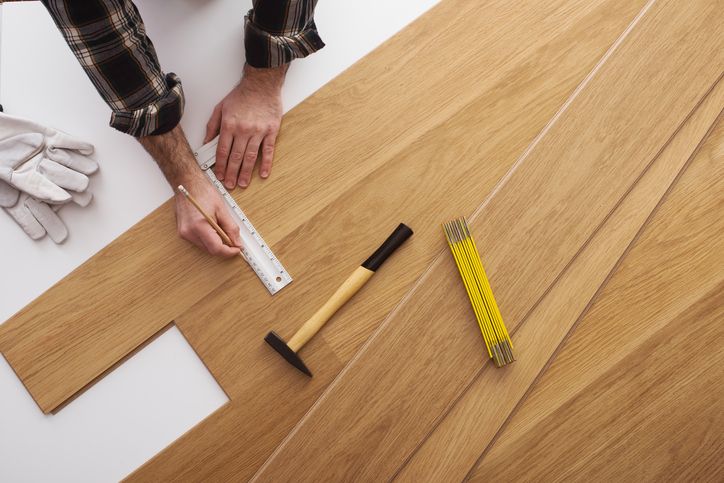
How does Classic Flooring Solutions match historic strip oak?
We approach every historic floor the same way: study what is there before adding anything new.
- Assess the floor on site. We identify species, cut, width, thickness, tongue profile and grade. We take moisture readings and test the finish for lead before any sanding.
- Take a sample to the shop. We pull one board from a closet or threshold so we can measure the real profile, not a catalog size.
- Source the boards. We harvest from your home first, add reclaimed stock where it fits, and have new boards milled to your exact profile when needed.
- Acclimate the wood. New boards sit in your home until their moisture content matches the existing floor. Skipping this step is the most common reason patches gap or cup later.
- Weave the boards in. We stagger new boards into the old ones so end joints fall randomly. A straight seam is the giveaway of a patch.
- Refinish as one floor. We sand old and new together, then test stain samples on the floor itself and check them in daylight before committing.
- Walk through and hand off a care plan. You get the finish details and a simple maintenance schedule.
How to maintain restored strip oak floors?
A restored floor can last another generation with a few habits.
- Control humidity. Keep indoor humidity steady, roughly 35 to 55 percent. A humidifier during St. Louis winters limits gaps.
- Clean gently. Use a soft broom, a vacuum without a beater bar, and a pH-neutral wood floor cleaner. Skip steam mops, oil soaps and wax on modern finishes.
- Protect the surface. Put felt pads under furniture and mats at exterior doors to catch grit.
- Recoat before you wear through. A light screen-and-recoat every few years in busy rooms saves you from a full sanding, which matters on a floor with limited thickness left.

FAQS: Matching Strip Oak
Can new oak be stained to match 100-year-old oak?
Often, but stain alone rarely finishes the job. The grain of new oak differs from old-growth wood. The most reliable match comes from sanding and refinishing the old and new boards together.
How many times can original strip oak be sanded?
A full 25/32-inch floor usually has several refinishes left, depending on how many it has already had. A 3/8-inch overlay floor may have one or two. We check the remaining wear layer before recommending a sanding.
Is restoring original strip oak worth it compared to new flooring?
For most century homes, yes. The original wood is denser than most new oak, it suits the house, and a matched repair usually costs less than tearing out and replacing whole rooms.
Do you work with contractors, architects and designers?
Yes. Through our Trade Program we mill matched flooring and millwork for renovation and restoration projects across St. Louis.
Ready to Talk About Your Floor?