
BLOG POST
7 Things to Know Before You Choose Wide Plank Hardwood
To choose wide plank hardwood gives you boards roughly 6 inches and wider, gives a room fewer seams, more visible grain, and a calmer, more substantial look than classic 2¼-inch strip oak. It also moves more, costs more, and is pickier about the room, the subfloor, and the climate it lives in.
That last point matters in St. Louis, where humid summers and dry, furnace-heated winters put every wood floor through a real seasonal swing. None of this makes wide plank a bad choice. It makes it a choice worth making with the full picture.
Below are seven things most showrooms skip, where wide plank works best, where to pass on it, and straight answers to the questions homeowners ask most.
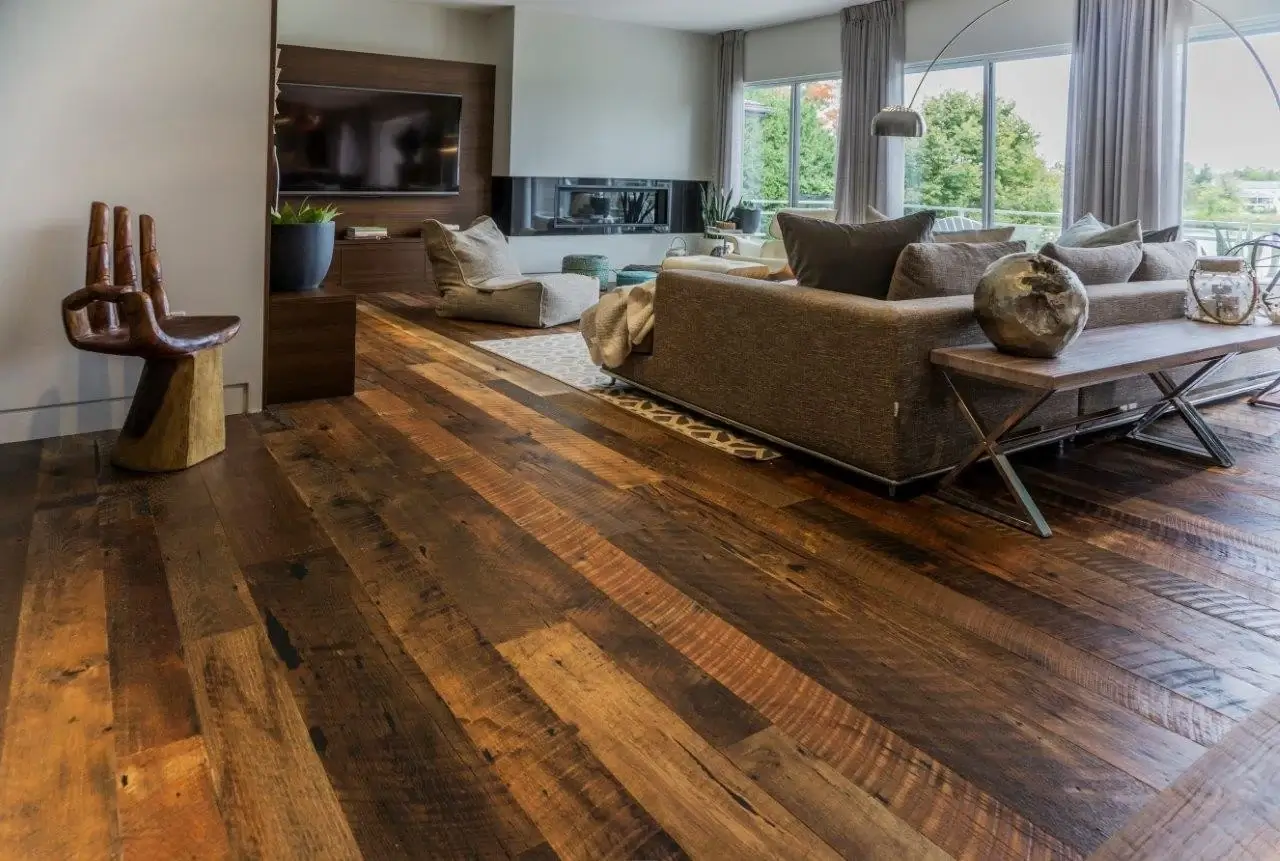
What is wide plank hardwood flooring?
Wide plank flooring is solid or engineered hardwood milled wider than standard strip flooring. Most of the industry treats 5 to 6 inches as the starting point. Common wide widths run 6 to 9 inches, and specialty boards reach 10 inches or more.
For most of the last century, 2¼-inch oak strip was the default, and it still sits under the carpet in plenty of older homes. Today, 5 to 7 inches is the mainstream choice, and 7 to 9 inches is what most people picture when they say “wide plank.”
The appeal is easy to see. Fewer seams let the floor read as one continuous surface. The grain becomes a design feature instead of background texture. And the same width can look farmhouse, traditional, or modern depending on species and finish.
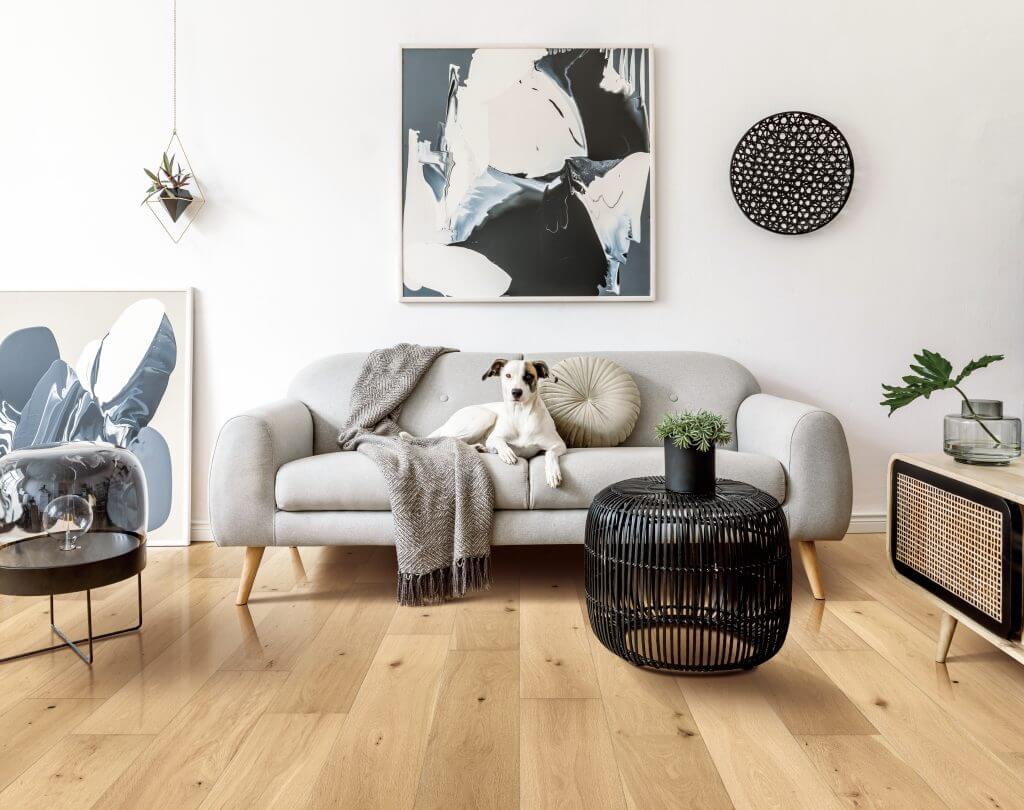
7 things to know before you choose wide plank hardwood
1. Why do wide plank floors gap and cup?
Wood swells in humid weather and shrinks in dry weather, and it does so across its width. A 6-inch board moves about three times as much as a 2-inch board under the same conditions, and that movement collects in far fewer joints. The result is winter gaps you can see from standing height and, in summer, cupping (raised edges) or crowning (a raised center) when moisture gets uneven.
This isn’t a defect. It’s wood. The fix is a stable indoor environment: most manufacturers want humidity held around 30 to 50 percent year-round, so check your product’s warranty for its exact range.
Tip: If your home has no whole-house humidifier, price one alongside the floor. Through a St. Louis winter it protects a wide plank floor more than any finish will.
2. Is engineered or solid better for wide planks?
For most homes, engineered. It has a real hardwood top layer bonded over a cross-layered core that resists movement. Above roughly 6 to 7 inches, that stability matters more than the appeal of “solid all the way through,” and many mills only make their widest boards engineered.
Solid still earns its place in historic restorations, site-finished floors meant to be sanded many times, and homes with tight humidity control.
Tip: Ask for the wear layer thickness. Around 3 mm or more allows at least one full sand and refinish. Thinner veneers may allow none.
3. Can you install wide plank flooring yourself?
We wouldn’t recommend it. Wide boards forgive very little. High spots in the subfloor telegraph through, boards need time to acclimate, and both the wood and the subfloor should be moisture-tested before install. Most pros glue-assist wide planks in addition to nailing them, which takes skill and the right adhesive.
Tip: Ask your installer how they check subfloor flatness and moisture before the boards arrive. A vague answer is a red flag.
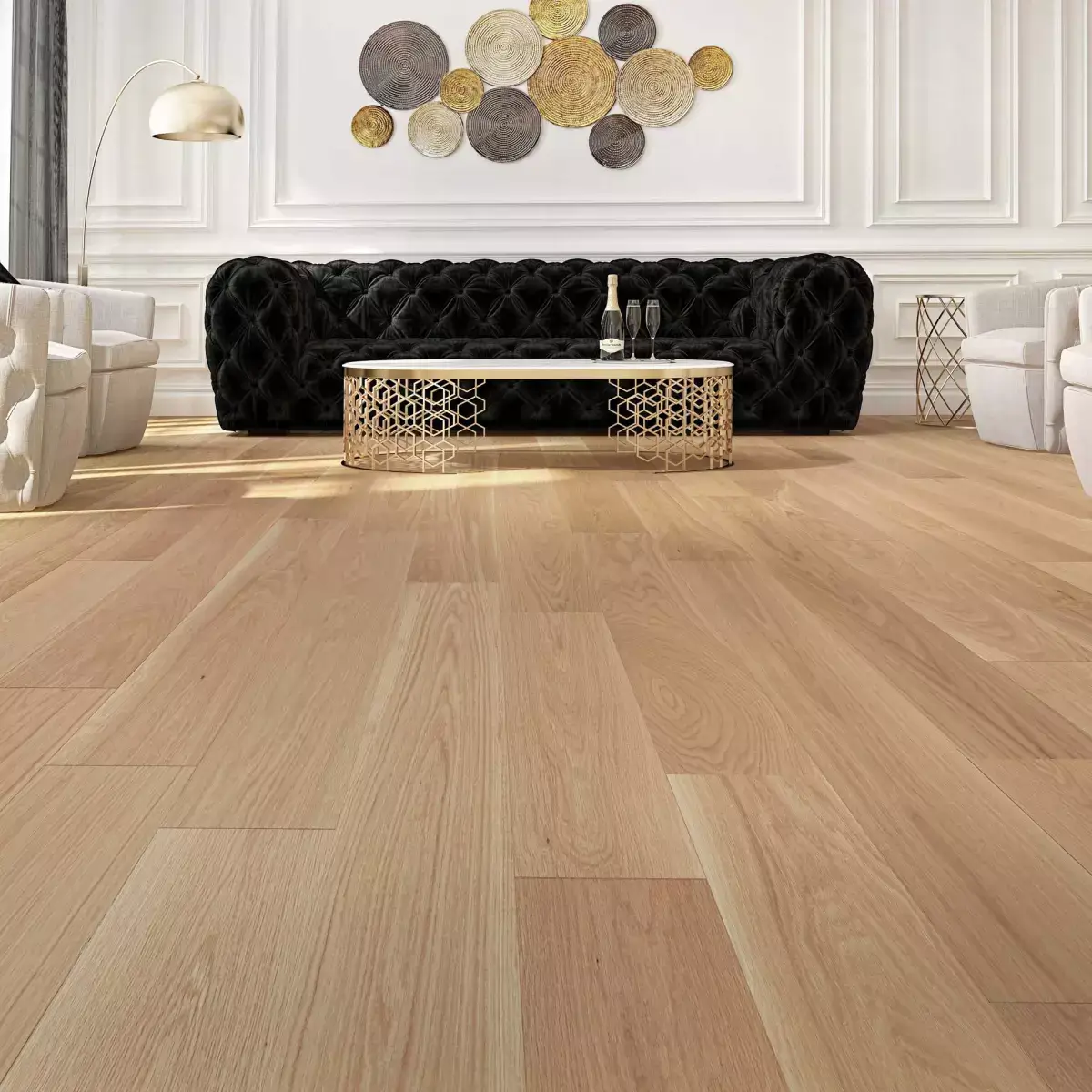
4. What plank width is right for my room?
Room size decides whether wide plank looks generous or crowded. Choosing a width in a large showroom and installing it in a small bedroom is the most common mistake.
Direction matters more once you go wide. Boards run parallel to the longest wall make a room feel longer. In a narrow hallway, very wide boards can read like stripes.
Tip: Lay three or four full-length boards in the actual room before you order.
| Room Size | Width That Usually Works | Why |
|---|---|---|
| Under about 12 x 12 ft | 3 to 5 in | Very wide boards look oversized and can make a small room feel smaller. |
| 12 x 12 to about 16 x 20 ft | 5 to 7 in | The safe middle for most bedrooms, kitchens and dining rooms. |
| Larger rooms and open main floors | 6 to 9 in | Wider boards ground a big space and keep long sightlines from looking busy. |
5. Will wide planks show more knots and color variation?
Yes. Every knot, mineral streak, and color shift gets bigger. Character grades can look rich in a rustic room and busy in a modern one. Select grades read calmer. White oak is the balanced choice for most homes, hickory brings strong light-to-dark contrast, and maple looks quiet but moves more.
Tip: Judge from several open boxes, not a single sample board.
6. How much more does wide plank hardwood cost?
Wide boards come from larger, older trees and produce more milling waste, so premium wide plank often runs 20 to 40 percent above a comparable mid-width floor. Glue-assisted installation adds labor, specialty widths can carry lead times of several weeks, and humidity equipment may join the budget.
Tip: Compare total installed cost, not the per-square-foot material price.
7. Are wide plank floors harder to maintain and repair?
Daily care is the same as any hardwood: sweep, use a damp microfiber mop, and skip steam mops. The difference is visibility. A scratch on a smooth, glossy 8-inch board is hard to miss, and replacing one wide board without disturbing its neighbors takes a professional.
Tip: Choose a matte or wire-brushed finish to hide everyday wear, and keep one unopened box from the same lot for future repairs.
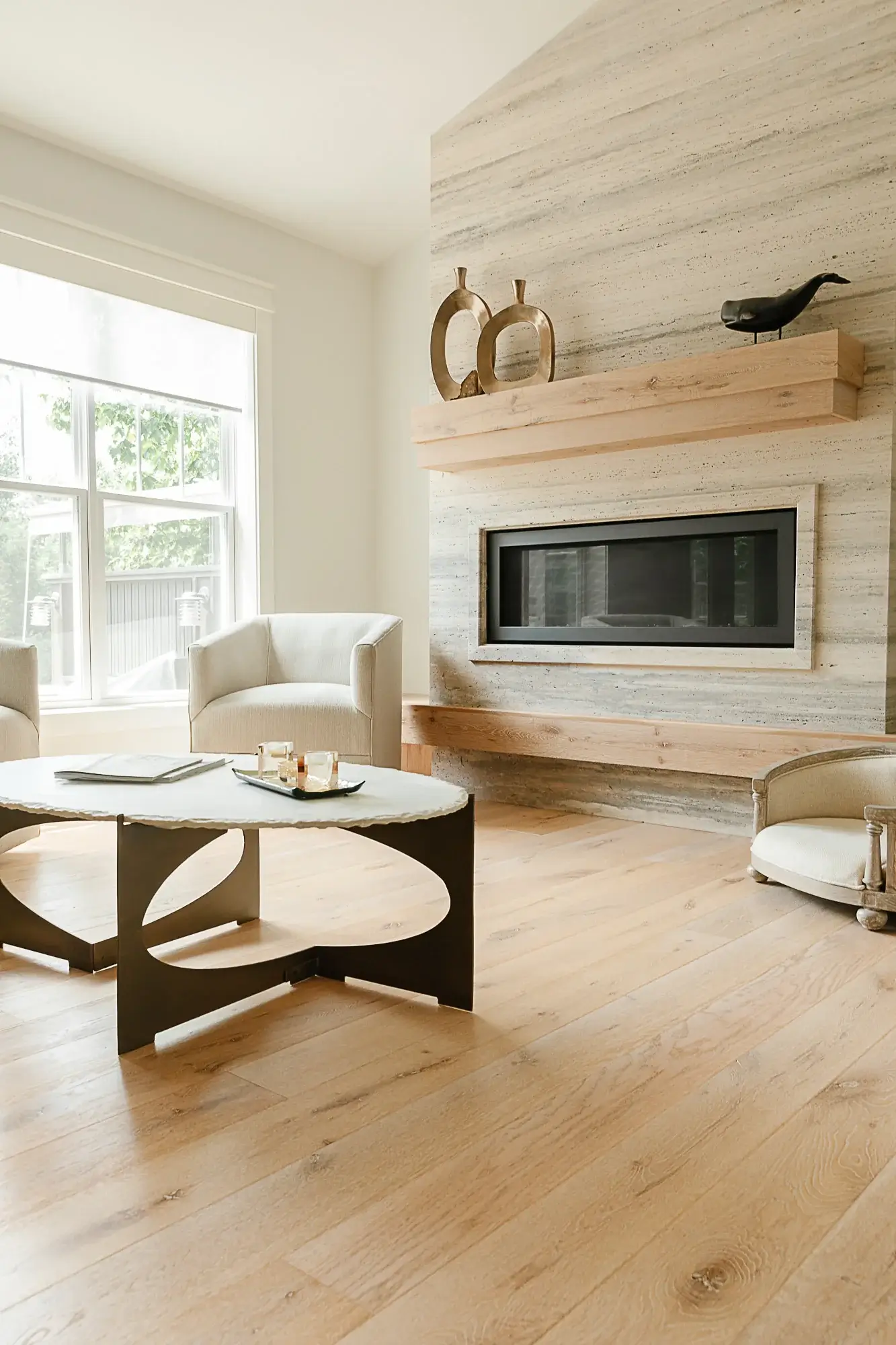
Where does wide plank flooring work best?
Wide plank shines in living rooms, dining rooms, primary bedrooms, entry foyers, and open-concept main floors where long sightlines let the boards show off. It also suits kitchens, as long as you choose engineered, use a durable finish, and wipe up spills quickly.
Skip it, or switch to engineered only, in these spots: bathrooms with daily splashes, basements on concrete slabs (solid wood should never go below grade), floors with radiant heat, and very small rooms where 8-inch boards overwhelm the space.
Why do some homeowners end up disliking wide plank?
When people regret wide plank, it’s rarely about the look in the showroom. It’s about winter gaps they weren’t warned about, a rustic grade that feels busy at home, scratches that stand out on a glossy finish, or a final bill well above the first quote. Almost every one of those is preventable with the right construction, grade, finish, and installer.
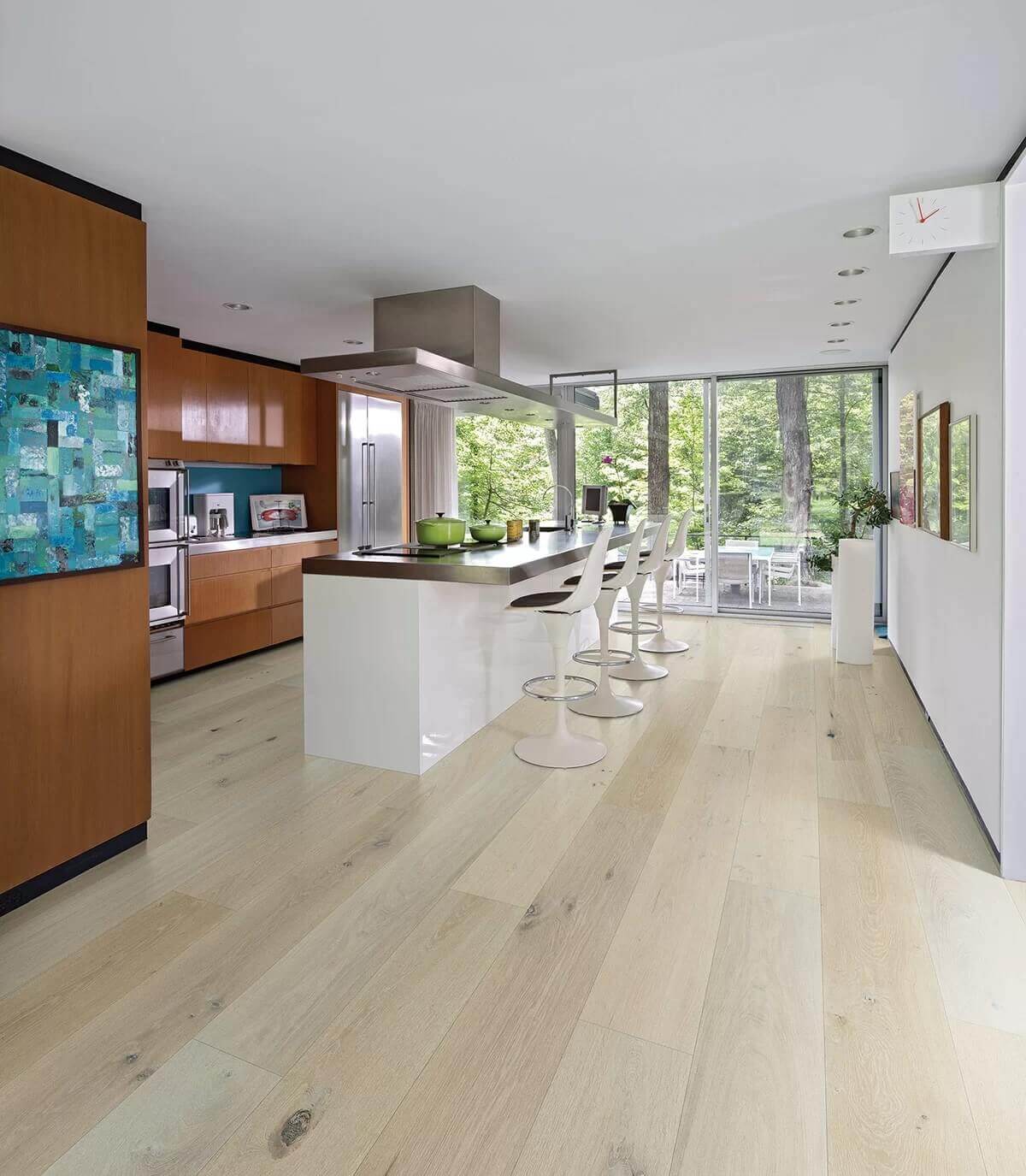
Comparing wide plank vs. standard hardwood
| Compare | Wide Engineered (6–9 in) | Wide Solid (6–9 in) | Standard Strip (2 1/4–4 in) |
|---|---|---|---|
| Seasonal movement | Low | High | Low to moderate |
| Over concrete or radiant heat | Often approved | No | Engineered only |
| Refinishing | 1 to 3 times, depending on wear layer | Many times | Many times |
| Relative cost | Premium | Highest | Lowest |
| Best fit | Most homes and open floor plans | Historic homes with tight humidity control | Older homes, small rooms and tighter budgets |
Let's talk about your floor
Contact our team and we’ll walk your space, assess your subfloor, and give you a detailed estimate with options, no obligation.
Is wide plank hardwood a good choice for St. Louis homes?
Yes, with the right setup. Our humid summers and dry, heated winters are exactly the swing that makes wide boards move, so engineered construction and steady indoor humidity matter more here than in milder climates.
Home age matters too. Many older homes in Webster Groves, Kirkwood, and University City still have original narrow oak, and a 9-inch plank next to it can look out of place. Mid-width boards, 5 to 6 inches, often bridge old and new. Newer open-plan homes in Chesterfield and Wildwood carry wider boards beautifully.
FAQS: Wide Plank Hardwood
What width is considered wide plank flooring?
Most manufacturers call boards 5 to 6 inches and wider “wide plank.” The most popular wide widths fall between 6 and 9 inches. Anything 10 inches or wider is specialty flooring, usually engineered, and typically needs a longer lead time.
Is wide plank hardwood worth the extra cost?
It is if the room is large enough to show it off and your home can hold steady humidity. In open main floors and large living spaces it adds real visual value. In small rooms or homes without humidity control, a quality 5-inch floor often gives you most of the look for less.
Do wide plank floors gap in winter?
Some seasonal gapping is normal on any hardwood, but it’s more visible on wide boards. Engineered construction and a humidifier that keeps your home within the manufacturer’s range keep gaps small. Gaps that close again in spring are expected movement, not a defect.
Can wide plank hardwood go in a kitchen or basement?
In a kitchen, yes, if it’s engineered with a durable finish and spills get wiped up promptly. In a basement on a concrete slab, only engineered products rated for below-grade use. Solid hardwood should never be installed below grade.
What humidity should I keep my wide plank floors at?
Most manufacturers specify roughly 30 to 50 percent relative humidity, year-round. In St. Louis, that usually means running a humidifier in winter and air conditioning or a dehumidifier in summer. Check your product’s warranty, since some brands set a tighter range.
Ready to Talk About Your Floor?