How Much Does It Cost to Install Tile Flooring? (2026)
Tile flooring is still one of the best “looks great + works hard” upgrades you can make, especially in kitchens, bathrooms, laundry rooms, and entryways. It’s durable, easy to clean, and can feel anything from classic to high-end depending on the material you choose. But how much does it really cost to install tile flooring in 2026?
In most typical projects, tile floor installation often lands around $7–$30 per square foot (materials + labor), but the true range is wider.
At the low end, some basic tile options can run around $2 per square foot, while premium materials like glass or metal can reach $100 per square foot (or more in specialty cases).
Average cost to install tile flooring in 2026
For a quick room example, a 200 sq. ft. space typically comes in around $1,000–$6,000+ total. However, we can think of tile pricing in two layers:
Common “real-world” range (most homeowners): $7–$30 per sq. ft. installed
Overall possible range (budget to luxury): $2–$100 per sq. ft. installed
Cost breakdown (materials vs. labor)
Here’s the cleanest way to understand a tile quote:
Materials: $2–$50+ per sq. ft.
Labor: $3–$15 per sq. ft.
Why labor swings so much: layout complexity, tile type (harder cuts), subfloor condition, and how much prep work is needed.
Tile material options and pricing (materials + labor)
Tile material is usually the #1 cost driver. Use this as your planning cheat sheet:
Tile Material
Cost per Sq. Ft.
Vinyl
$2–$14
Linoleum
$3–$8.50
Cork
$5–$12
Terracotta
$7–$14
Ceramic
$7–$45
Travertine
$8–$33
Limestone
$9–$27
Porcelain
$12–$40
Granite
$15–$30
Pebble
$16–$30
Mosaic
$17–$40
Glass
$20–$100
Terrazzo
$25–$80
Metal
$30–$50
Budget-friendly favorites: Ceramic and porcelain are popular because they balance cost, durability, and style options.
Other factors that can change your final price
1) Tile durability (PEI rating)
For floors (especially high-traffic areas), installers often recommend PEI 4 or 5. Higher durability can cost more upfront, but it generally holds up better long-term.
2) Room complexity
Bathrooms and kitchens often cost more per square foot because of tight cuts, fixtures, corners, and transitions.
3) Tile size, shape, and pattern
Mosaic / intricate patterns = more labor, more grout lines
Large-format tile can require extra floor prep to keep everything flat
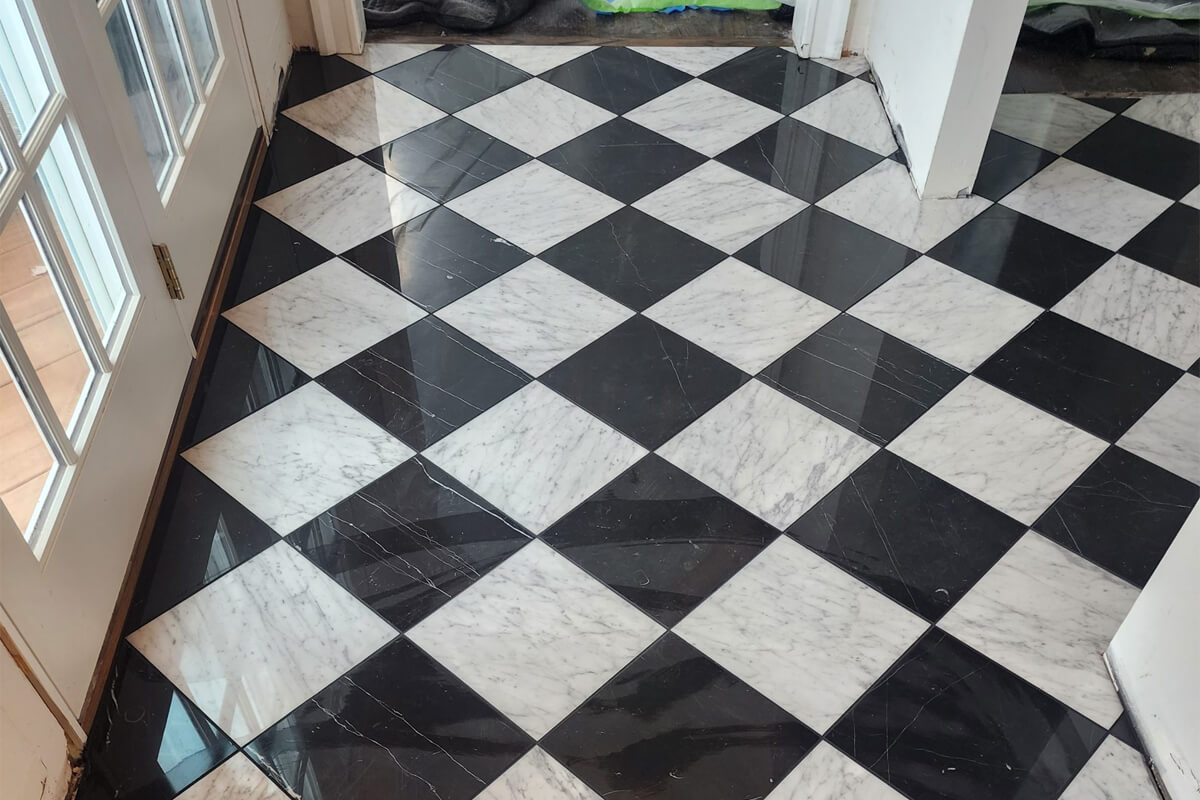
Herringbone, borders, inlays = extra layout + cutting time
Additional costs to consider
Tile installation often includes more than setting tile. Common add-ons:
Subfloor repair or replacement: $2–$5 per sq. ft.
Old flooring removal: $1–$3 per sq. ft.
Moisture barrier / underlayment: $0.50–$2 per sq. ft.
Tile sealing (natural stone): $0.75–$1.50 per sq. ft.
Tip: If you’re already doing multiple flooring upgrades, bundling work into one project window can reduce repeated setup costs and shorten the overall timeline.
Comparison with other flooring types
Here’s a simple “same-size room” comparison many homeowners find helpful:
Flooring Type
Cost per 200 sq. ft.
Tile
$1,000–$5,800
Hardwood
$3,530
Carpet
$750
Vinyl Sheet
$2,180
Tile isn’t always the cheapest upfront, but its durability and low maintenance often make it a strong long-term value, especially in moisture-prone or high-traffic areas.
How to save on tile installation in 2026
Choose ceramic or vinyl for a stylish, budget-friendlier route
Use larger tiles to reduce cuts + grout lines (often less labor)
Keep patterns simple (straight lay costs less than complex layouts)
Buy during sales, and order correctly (many pros suggest planning extra for waste)
If you’re comfortable, handle easy prep like clearing the room and removing baseboards (when appropriate)
FAQs
What’s the average cost to install tile flooring?
Most typical projects fall around $7–$30 per sq. ft. installed, but the broader market range can run $2–$100 per sq. ft. depending on materials and complexity.
How long does tile floor installation take?
Many rooms take 2–5 days when you include prep, tile setting, grouting, and cure/dry time (longer if subfloor repairs are needed).
Is professional installation worth it?
Tile is precise work. Pros reduce uneven tile, cracking risk, and wasted materials—especially with large-format tile, detailed layouts, and wet areas.
Is tile worth it in 2026?
If you want a floor that handles real life such as water, traffic, pets, everyday mess, tile continues to be a smart investment. The key is budgeting realistically: tile choice sets the baseline, but prep work and layout complexity are what usually move a quote up.
Send us your room size (sq. ft.), the room type (kitchen/bath/entry), and the tile you’re considering (ceramic/porcelain/stone), and we’ll help you turn these ranges into a tighter budget target.