BLOG POST
5 Best Flooring Types for High-Traffic for Your Home
Your floors take a beating. Entryways caked with Missouri mud, kitchens that see three meals a day, hallways worn to a path by kids and pets, high-traffic areas punish cheap decisions fast. The good news is that choosing the right floor upfront means you won’t be pulling it up in five years, so here are the best flooring types for high-traffic for your home.
This guide walks through the five most durable flooring options for busy homes with real comparison data, a room-by-room breakdown for St. Louis conditions, and honest trade-offs from a crew that has been laying and refinishing floors here since 2004.
What makes a space “high-traffic”?
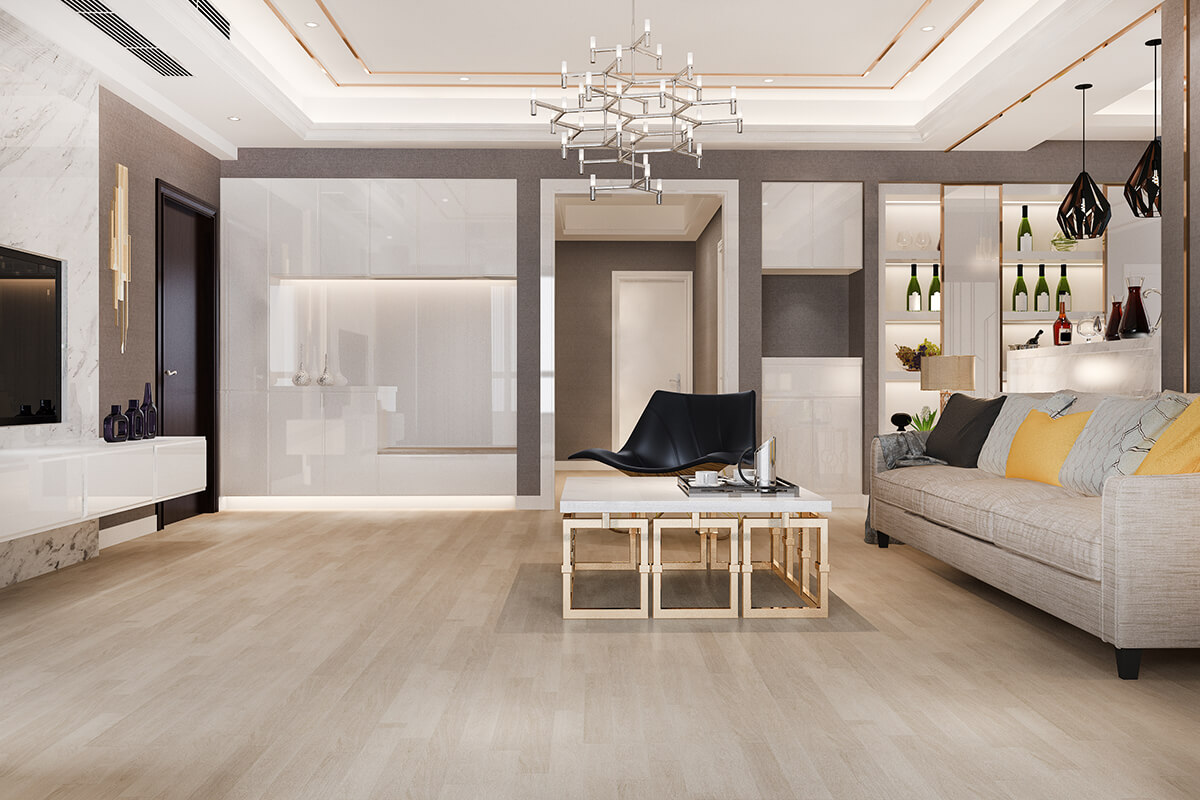
High-traffic areas are any spaces in your home that see repeated, daily foot movement. The usual suspects:
- Front and back entryways (especially brutal in St. Louis winters with road salt and clay soil)
- Kitchens (foot traffic plus spills, grease, and dropped items)
- Hallways and staircases
- Open-plan living and dining rooms
- Mudrooms and laundry rooms
Each space has slightly different demands. A mudroom needs waterproofing above everything else. A dining room needs scratch resistance and a floor that looks good for 20 years. A staircase needs grip and a surface that can be refinished as wear shows. The right answer isn’t always the same material but it’s always the one chosen with intention.
The 5 Best Flooring Types for High-Traffic Areas
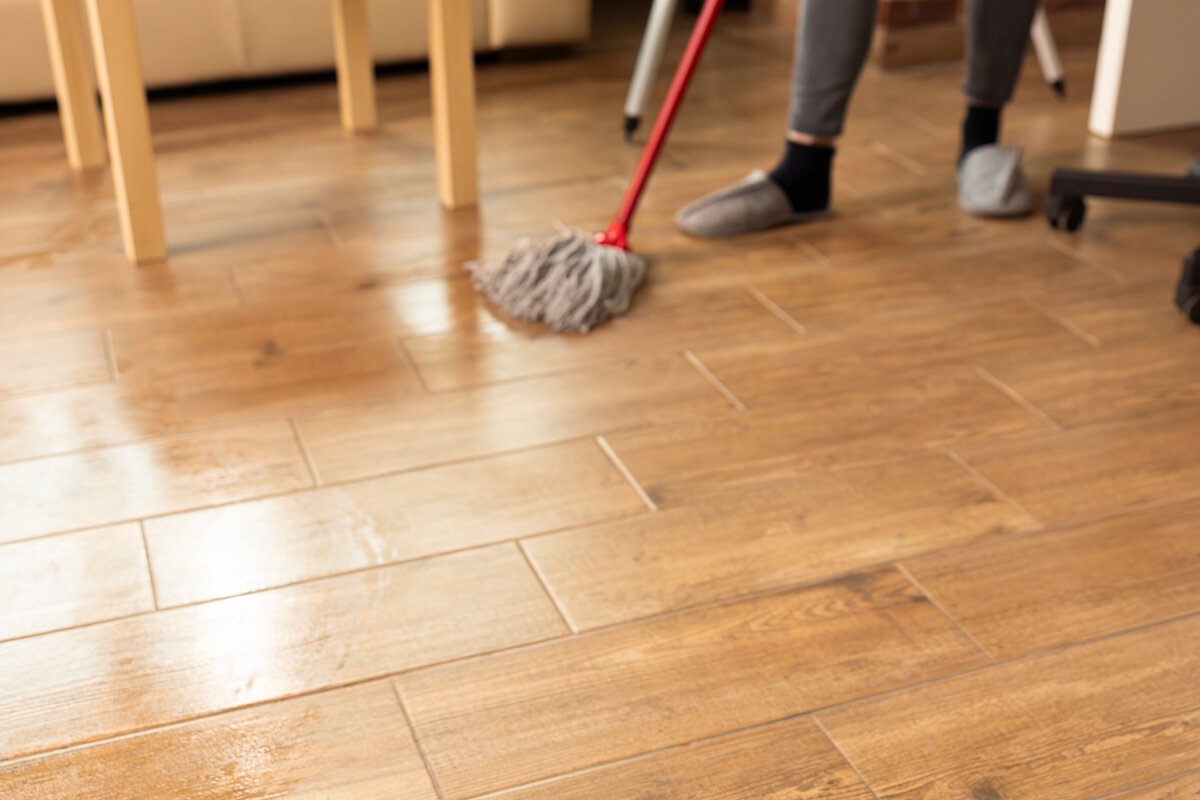
1. Site-Finished Hardwood
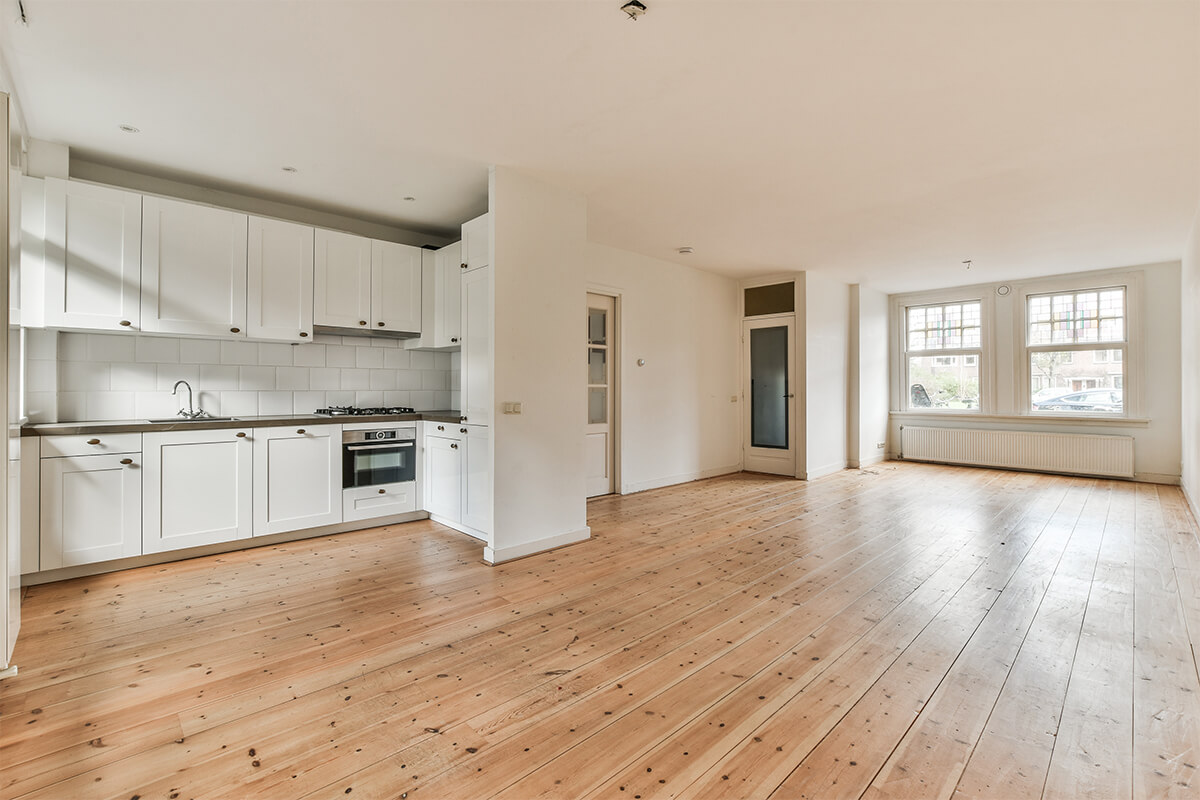
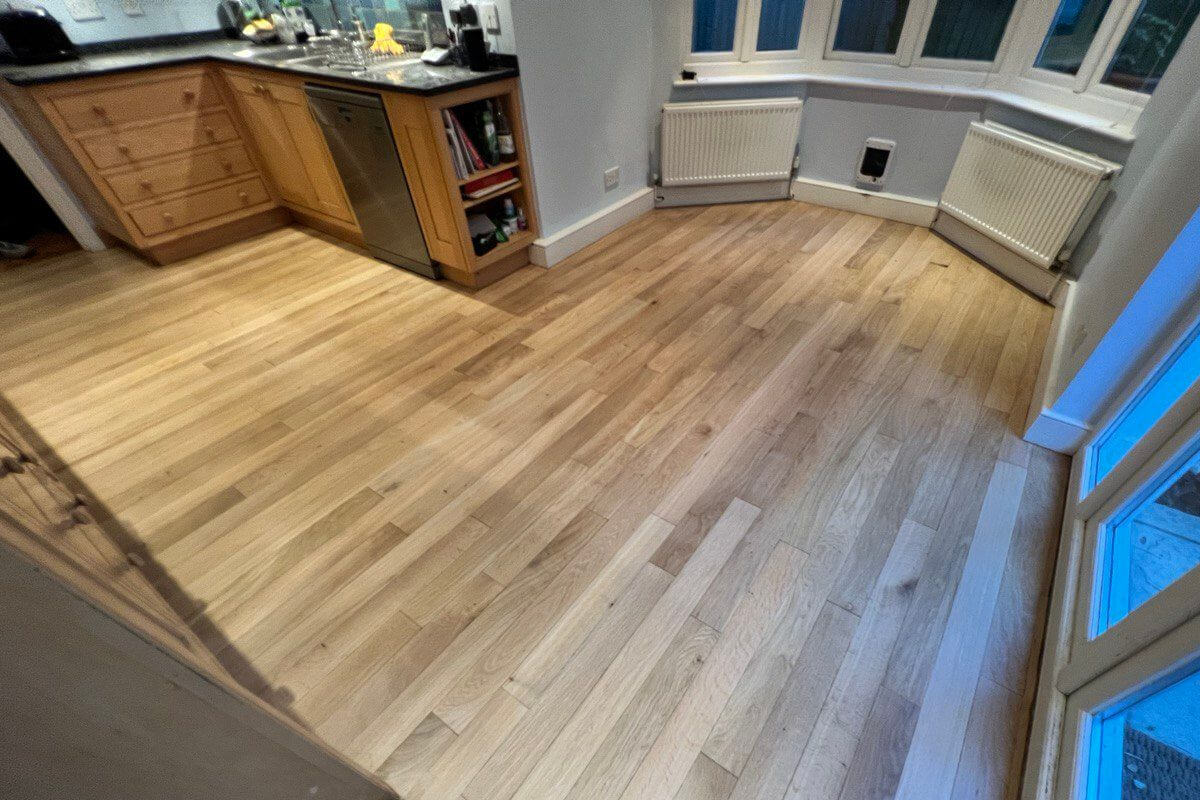
No flooring ages better. Site-finished hardwood that is sanded and stained in place after installation, gives you a seamless surface that can be refinished multiple times over its lifetime. A well-laid oak floor, cared for properly, can last 80 to 100 years in a St. Louis home.
The trade-off is that hardwood is not waterproof. It expands and contracts with humidity, which matters in a climate like St. Louis where summers are swampy and winters are dry. That’s why we recommend it for living rooms, dining rooms, hallways, and bedrooms, not kitchens or mudrooms.
- Best for: Living rooms, dining rooms, bedrooms, hallways
- Pro tip: Specify a water-based polyurethane finish (satin or matte) for high-traffic areas, it dries harder and shows scuffs less than oil-modified finishes.
2. Pre-Finished Hardwood
Pre-finished hardwood arrives from the mill already sanded, stained, and coated with aluminum oxide, one of the hardest finishes available. The surface is tougher than most site-applied finishes, and installation is faster since there’s no waiting for finish coats to cure.
The limitation is that you can’t sand off that factory finish as easily as a site-applied coat, which means the refinishing life is shorter. Most pre-finished floors can be refinished once or twice before you’re into the tongue-and-groove, while a site-finished floor with a thicker wear layer can go four or five rounds.
- Best for: Occupied homes that need a faster turnaround, rental properties, and budget-conscious renovations
3. Luxury Vinyl Plank (LVP/LVT)
Luxury vinyl has earned its reputation. Rigid-core LVP (also called SPC, stone plastic composite) is 100% waterproof, scratch-resistant, comfortable underfoot, and available in designs that convincingly replicate hardwood and stone. It’s our most-installed product for kitchens, mudrooms, and basements.
In St. Louis homes, where basement moisture and mudroom abuse are real concerns, LVP is often the right call even for homeowners who love the look of wood. A quality residential LVP (12 mil wear layer minimum, 20 mil for heavy households) holds up to pets, kids, and boots without complaint.
The honest limitation is that LVP cannot be refinished. When it’s worn or damaged, you replace it. The good news is that planks can often be replaced individually, and LVP typically costs less upfront than hardwood.
- Best for: Kitchens, mudrooms, basements, bathrooms, and anywhere water is a real risk
4. Porcelain & Ceramic Tile
Porcelain tile is the most durable option on this list. It doesn’t scratch, it doesn’t dent, and with proper care it genuinely lasts a lifetime. The non-porous surface resists stains and moisture completely, making it the gold standard for bathrooms, kitchens, and entryways.
The trade-offs is that tile is hard underfoot (fatiguing for people who stand for long periods), grout lines require periodic sealing, and cracked tiles must be replaced individually rather than refinished. Installation also requires professional skill to ensure proper substrate prep and waterproofing.
- Best for: Bathrooms, entryways, laundry rooms, and kitchens where water resistance trumps everything
5. Laminate
Laminate earns its place in medium-traffic rooms where budget matters. It mimics the look of hardwood at a fraction of the cost, installs quickly via click-lock systems, and resists everyday scuffs well. Modern water-resistant laminates handle the occasional spill, though they’re not waterproof in the way LVP or tile are.
The key limitation is that laminate cannot be refinished. Once the protective layer wears through (typically after 10 to 15 years in a busy home) replacement is the only option. For a forever home, hardwood or LVP will serve you better. For a rental or a room that won’t see heavy traffic, laminate is a sensible, cost-effective choice.
- Best for: Guest rooms, offices, rental properties, and lower-traffic living spaces
Let's talk about your floor
Contact our team and we’ll walk your space, assess your subfloor, and give you a detailed estimate with options, no obligation.
Side-by-Side Comparison
Use this table to quickly match your priorities to the right material.
| Flooring type | Durability | Water resistance | Can be refinished? | Lifespan |
|---|---|---|---|---|
| Site-Finished Hardwood | ★★★★☆ | Low | Yes – multiple times | 80–100 yrs |
| Pre-Finished Hardwood | ★★★★☆ | Low | Yes – limited | 40–60 yrs |
| Luxury Vinyl (LVP/LVT) | ★★★★★ | 100% waterproof | No | 15–25 yrs |
| Porcelain / Ceramic Tile | ★★★★★ | Excellent | No | 50+ yrs |
| Laminate | ★★★☆☆ | Moderate | No | 10–15 yrs |

Choosing flooring for St. Louis homes specifically
St. Louis presents a specific set of challenges that national flooring guides often gloss over. The climate swings from humid 95°F summers to dry, below-freezing winters, a range that causes wood to expand and contract significantly.
Missouri clay soil is some of the most abrasive tracked-in dirt you’ll find anywhere, and the city’s older housing stock, comes with original subfloors that need careful assessment before any new installation.
A few St. Louis-specific notes:
- Basements in St. Louis are often semi-conditioned and prone to seasonal moisture. Avoid solid hardwood below grade entirely. LVP with a rigid SPC core is the right choice here.
- Historic homes in neighborhoods like Lafayette Square, the Hill, or Webster Groves often have original strip oak worth saving. A sand-and-refinish job can restore floors that look irreplaceable — because they are.
- Entryways take the worst of Missouri’s seasons. Porcelain tile or LVP with a tight seam at the threshold is the most defensible choice.
- Humidity control matters as much as flooring choice. If your home swings more than 15 percentage points in relative humidity between seasons, even a good hardwood floor will move. A whole-home humidifier makes a real difference.
Here’s how we approach room-by-room recommendations for most St. Louis homes:
| Area of home | Best choice | Why it works in St. Louis |
|---|---|---|
| Entryway / Mudroom | Porcelain Tile or LVP | Handles mud, salt, and Missouri humidity without warping |
| Kitchen | LVP or Porcelain Tile | Waterproof, easy cleanup, holds up to daily family traffic |
| Living / Dining Room | Site-Finished Hardwood | Refinishable for decades; custom stain to match your style |
| Hallways & Stairs | Hardwood or LVP | Durable underfoot; hardwood adds lasting resale value |
| Basement | LVP (Rigid Core SPC) | 100% waterproof — essential given St. Louis seasonal moisture |
Let's talk about your floor
Contact our team and we’ll walk your space, assess your subfloor, and give you a detailed estimate with options, no obligation.
Tips for getting the most life from any flooring
Regardless of which material you choose, these habits extend the life of any high-traffic floor:
- Put quality mats at every exterior door. The single most effective thing you can do for hardwood and LVP.
- Use felt pads on all furniture legs. Dragging furniture without them scratches any surface, including tile.
- Maintain indoor humidity between 35–55% year-round. This is especially important for hardwood.
- Clean spills immediately on hardwood and laminate. LVP and tile are more forgiving, but dried spills still cause staining on grout.
- Refinish hardwood before it reaches bare wood. Once you can see the grain directly, you’re sanding into the board rather than the finish — and that costs more to fix.
- Schedule a professional inspection and light buff-and-recoat on hardwood every 3–5 years in heavy-traffic areas. It’s far cheaper than a full sand-and-refinish.
Not sure what’s right for your home?
Three generations of our family have been laying and refinishing floors in St. Louis since 2004. We’ve seen every substrate condition, every humidity problem, and every flooring type put to the test in this climate.
If you’re weighing hardwood against LVP, trying to salvage original floors in an older home, or planning a full renovation, we’re happy to walk the job with you before you commit to anything.
The fastest way to start is to fill the form bellow. We’ll come out, look at your space and subfloor, and give you options with honest trade-offs.