BLOG POST
5 Best Flooring Companies in St. Louis & How to Choose One
Most St. Louis homeowners compare flooring companies on price and product selection, but the biggest factor in how a floor turns out is who installs it and who stands behind the work afterward, so here’s some tips on the flooring companies in St. Louis and things you should consider.
Flooring providers in St. Louis fall into five categories: full-service flooring specialists, showrooms that subcontract installation, big-box stores, general contractors, and independent installers. Each one handles a different share of the job in-house.
The right company for your project handles selection, subfloor prep, installation, and follow-up under one roof, and can show you past work that matches what you want.
Anyone who has shopped for new floors knows how quickly the process gets confusing.
One company quotes you a price per square foot that doesn’t include prep. Another sells you the material but hands installation to a crew you never meet. A third can do the job but has never installed the herringbone pattern you have your heart set on.
This guide ranks the five main types of flooring companies in St. Louis by how much of your project they handle directly, from the showroom to the final walkthrough. Knowing what each type does and doesn’t take responsibility for is the fastest way to narrow your list and avoid the most common flooring regrets.

Why choosing a flooring company in St. Louis is harder than it looks
Flooring is one of the few home projects where the product and the installation matter equally. A premium white oak plank installed over an uneven subfloor will squeak, gap, or cup within a year. A modest product installed carefully will look good for decades
St. Louis adds its own challenges. Humid summers and dry winters cause wood to expand and contract more than it would in a milder climate, which makes acclimation and moisture testing essential rather than optional. Many homes in older neighborhoods have original hardwood worth saving, plaster walls, and subfloors that have settled over the decades, all of which require an installer who knows how to assess and prepare the space before a single board goes down.
That’s why the question isn’t just “who sells the floor I want?” It’s “who will take responsibility for it being done right?”
5 types of flooring companies in St. Louis
1. Classic Flooring Solutions
Best for: homeowners who want selection, installation, refinishing, and custom work handled by one accountable team
Classic Flooring Solutions is a full-service flooring company serving. Rather than splitting your project between a salesperson, a subcontracted crew, and a separate warranty department, one team manages the job from the first measurement to the final walkthrough.
That matters most in the places where flooring projects usually go wrong. Subfloor preparation, moisture control, transitions between rooms, and the finishing details that separate a professional installation from an adequate one. When the same company that recommends your product also installs it, there’s no finger-pointing if something needs attention later.
Classic Flooring Solutions also handles the specialty work many flooring companies turn down, including herringbone and chevron patterns, custom borders, wood floor medallions, and stair installations. These projects require precise layout and cutting, and they’re where an experienced installer makes the most visible difference. You can see examples in the showroom section.
2. Flooring showrooms and retailers
Best for: Browsing a wide product selection in person
Flooring showrooms let you see and touch samples, compare finishes under real lighting, and get guidance from staff who know their product lines well. For narrowing down what you want, a good showroom is a genuinely useful stop.
The catch is what happens after the sale. Many showrooms subcontract installation to independent crews, which means the person who sold you the floor may never see your home, and the crew doing the work may be different from one job to the next.
Where it falls short: Quality depends heavily on which subcontractor you get, and responsibility can get murky if problems show up months later. The showroom may point to the installer, and the installer may point to the product.
What to look for: Ask directly whether installers are employees or subcontractors, how long they’ve worked with the showroom, and who handles warranty claims on installation, not just the product.

3. Big-box home improvement stores
Best for: Budget-friendly, straightforward projects in a single room
Big-box stores offer competitive material pricing, frequent promotions, and the convenience of shopping where you already buy everything else. For a simple, small project, they can be a reasonable choice.
Installation is almost always outsourced to third-party contractors assigned by region. Scheduling runs through a central system, and you often won’t know who is coming until the crew arrives.
Where it falls short: Installation quotes can grow once the crew assesses the subfloor, and specialty work like patterns, stairs, or hardwood restoration is usually outside their scope. Communication often runs through a call center rather than a person who knows your project.
What to look for: Read the installation agreement closely for what’s excluded (furniture moving, old floor removal, subfloor repair, trim), and ask whether the price is final after the in-home measurement.
4. General contractors and remodelers
Best for: Flooring as one part of a larger renovation
If you’re remodeling a kitchen or finishing a basement, a general contractor can coordinate flooring alongside cabinetry, drywall, and electrical work. The convenience of one point of contact for a big project is real.
Most general contractors don’t install floors themselves. They hire a flooring sub, often whoever is available and competitively priced for that job.
Where it falls short: Flooring is one line item in a much bigger budget, so it may not get specialist attention. Your contractor may also add a markup on top of the flooring sub’s price.
What to look for: Ask which flooring company your contractor plans to use, and check that company’s work and reviews yourself. You can also ask whether you’re allowed to bring in your own flooring specialist.
5. Independent installers
Best for: Homeowners comfortable managing a project themselves
Independent installers and small crews can be skilled, flexible, and affordable. Some of the best flooring craftspeople in any city work on their own.
The challenge is vetting. Quality, insurance coverage, and reliability vary widely, and you’re typically responsible for sourcing materials, confirming quantities, and coordinating the schedule.
Where it falls short: Warranties may be informal or nonexistent, and if the installer becomes unavailable, there’s no company behind them to fix problems.
What to look for: Proof of general liability insurance, written estimates, recent references you can actually call, and photos of completed jobs similar to yours.

What to look for when choosing a flooring company
Most homeowners compare quotes on price per square foot. That number matters, but these questions tell you far more about how your floor will turn out.
Who will actually install my floor?
This is the most important question you can ask. You want to know whether installers are employees or subcontractors, how much experience they have with your specific flooring type, and whether the same crew will be there from start to finish.
How do you prepare the subfloor?
A good flooring company will talk about moisture testing, checking for level, fixing squeaks, and addressing any damage before installation. If a quote doesn’t mention prep at all, ask what happens if the crew finds a problem once the old floor comes up, and how that affects the price.
How long will the flooring acclimate?
Wood and some other materials need time to adjust to your home’s humidity before installation, and St. Louis weather makes this especially important. The company should follow the manufacturer’s acclimation guidelines and explain how they check that the material is ready.
Let's talk about your floor
Contact our team and we’ll walk your space, assess your subfloor, and give you a detailed estimate with options, no obligation.
What exactly is included in the quote?
Ask whether the price covers removing and disposing of the old floor, moving furniture, trim and baseboards, transitions between rooms, stairs, and finishing. Two quotes that look far apart are often just covering different scopes of work.
What warranty do you offer on installation?
Manufacturer warranties cover the product. Installation warranties cover the workmanship. Ask how long the installation warranty lasts, what it covers, and who you call if something goes wrong.
Can I see work similar to my project?
Portfolios and reviews are useful, but look specifically for projects like yours. If you want herringbone, chevron, or a medallion, ask to see pattern work the company has completed, not just straight-plank installations.
Find the right flooring company for your St. Louis home
Most homeowners end up choosing between a store, a showroom, or a contractor without realizing how much of the job each one hands off to someone else. The difference shows up months and years later, in floors that stay flat, quiet, and beautiful, or floors that don’t.
Classic Flooring Solutions handles selection, preparation, installation, and custom work with one accountable team, so you always know who is responsible for your floor. Whether you’re replacing carpet with hardwood, restoring original floors in an older home, or planning a herringbone entryway, [request a free estimate] and we’ll walk you through your options.

FAQS: Choosing a flooring company in St. Louis
Who installs herringbone or chevron wood floors in St. Louis?
Pattern floors require precise layout, careful cutting, and more installation time than standard planks, so many general flooring companies and big-box installers don’t offer them. Look for a company that can show you completed herringbone or chevron projects. Classic Flooring Solutions installs herringbone, chevron, custom borders, and medallions; see our [Custom and Specialty Work] page for examples.
Should I buy flooring from a store and hire an installer separately?
You can, but it splits responsibility. If a problem appears, the store may blame installation and the installer may blame the product. Buying from and hiring the same company keeps accountability in one place.
Why do flooring quotes in St. Louis vary so much?
Differences usually come down to scope. One quote may include subfloor prep, old floor removal, trim, and transitions while another leaves them out. Ask each company for an itemized quote so you can compare the same work.
How long does flooring installation take?
It depends on the size of the space, the material, and how much prep is needed. Acclimation time for wood flooring is often the longest part of the timeline. A good company will give you a clear schedule before work starts.
Is it worth refinishing my old hardwood instead of replacing it?
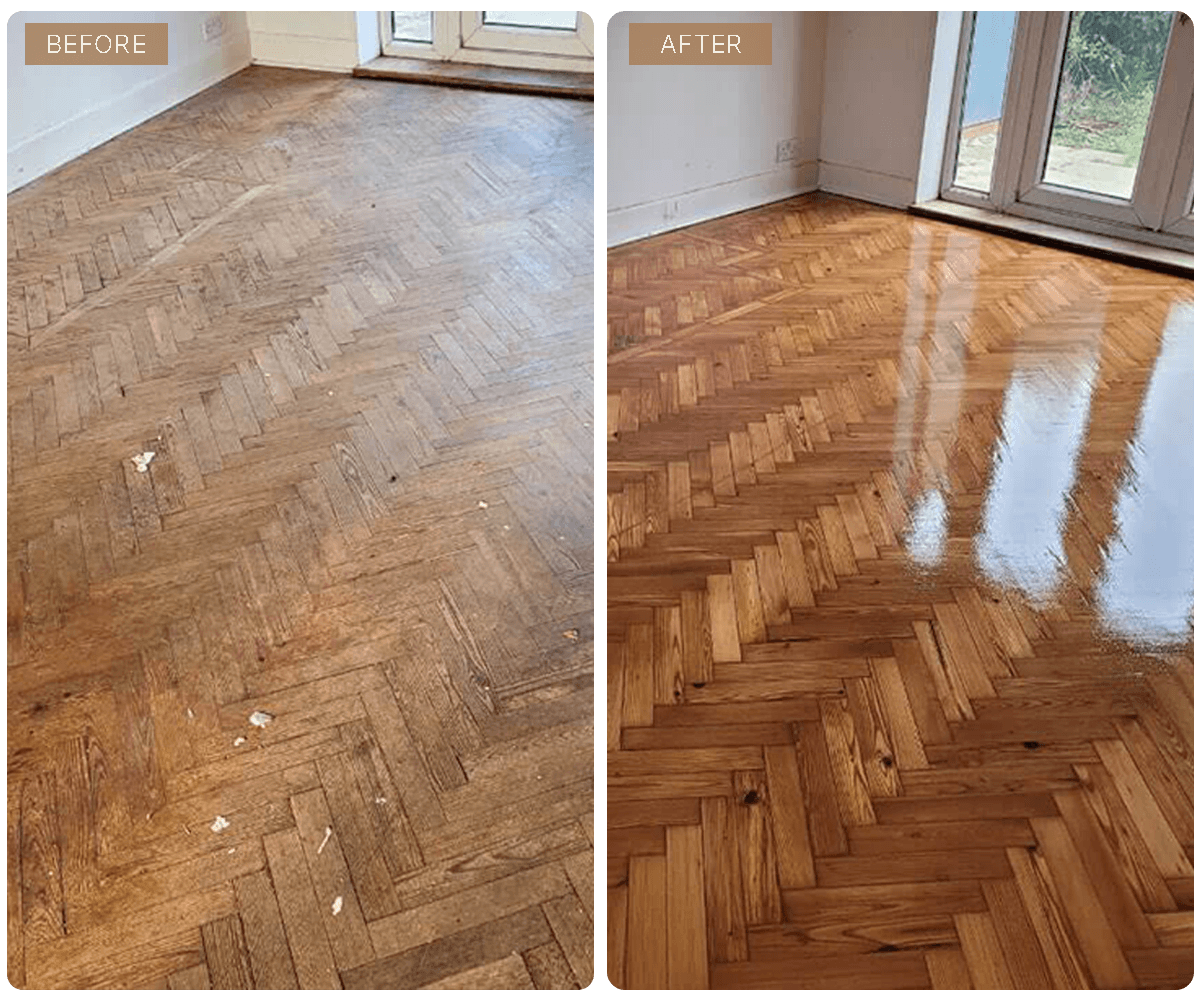
Often, yes. Many older St. Louis homes have solid hardwood that can be sanded and refinished several times. A flooring specialist can assess how much wear layer remains and whether refinishing makes sense.
Ready to Talk About Your Floor?