BLOG POST
5 Reasons to Avoid Hardwood Flooring in The Bathroom
Hardwood floors are one of the most requested upgrades in any home renovation and for good reason. They’re warm underfoot, beautiful to look at, and they add real value to a property. But when a homeowner asks us about putting hardwood in the bathroom, we always tell to avoid hardwood flooring in the bathroom.
We’re a third-generation flooring company based in St. Louis, and we’ve installed, refinished, and repaired floors across the metro for over 20 years. We’ve also seen, firsthand, what moisture does to wood in a bathroom. Sometimes it takes a year. Sometimes it takes five. But the outcome is nearly always the same: cupped boards, failed finish, and a floor that has to come out.
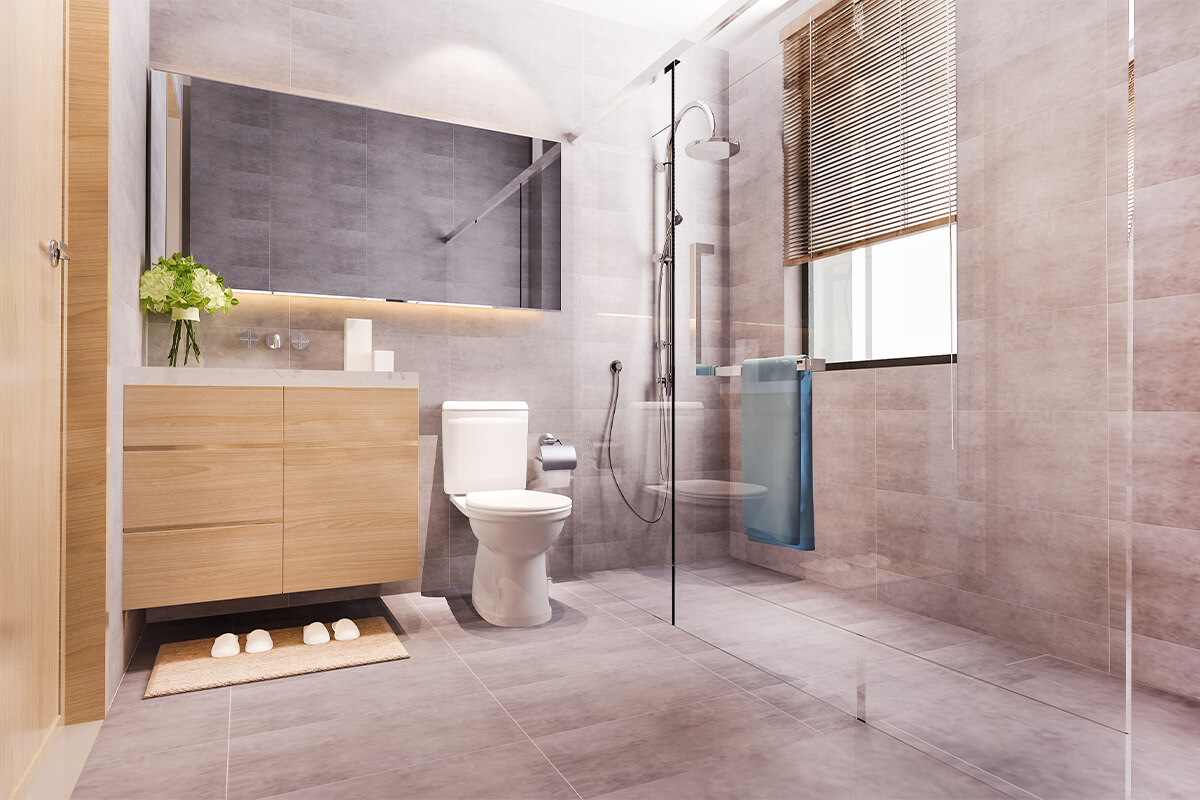
Reason 1: Bathroom humidity constantly works against hardwood floors
Wood is a hygroscopic material, meaning it naturally absorbs and releases moisture from the surrounding air. In a living room or bedroom, this cycle is gentle and manageable. In a bathroom, it’s relentless.
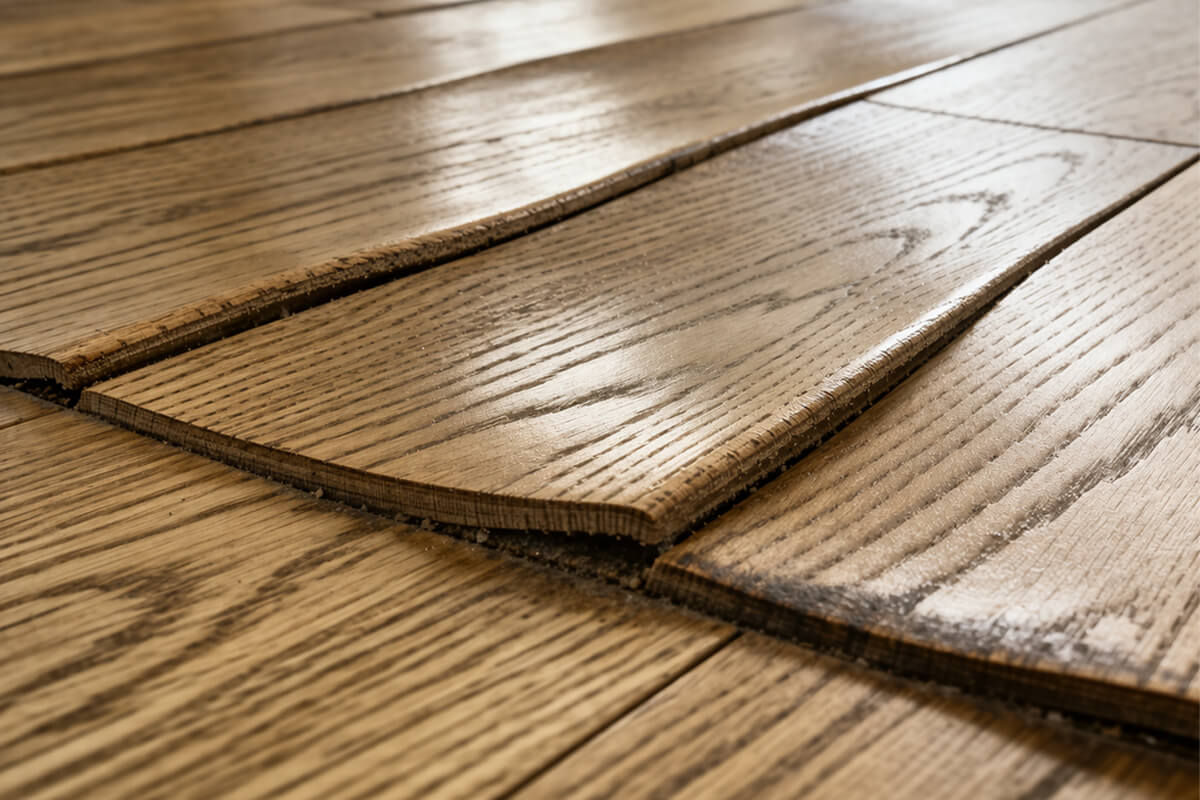
Every shower fills the room with steam. Every bath raises the humidity. That moisture works its way into hardwood from all sides including the bottom, which typically receives no finish protection at all. Over time, this causes boards to expand, contract, cup (bow upward at the edges), and eventually crack or warp.
According to the National Wood Flooring Association (NWFA), solid hardwood is not recommended for high-moisture environments. The physics of wood simply don’t cooperate with a bathroom’s daily humidity cycle.
Pro tip: If your bathroom has a window and an exhaust fan that actually gets used, the risk goes down, but it never goes away. Run your exhaust fan during every shower and for at least 15 minutes after.
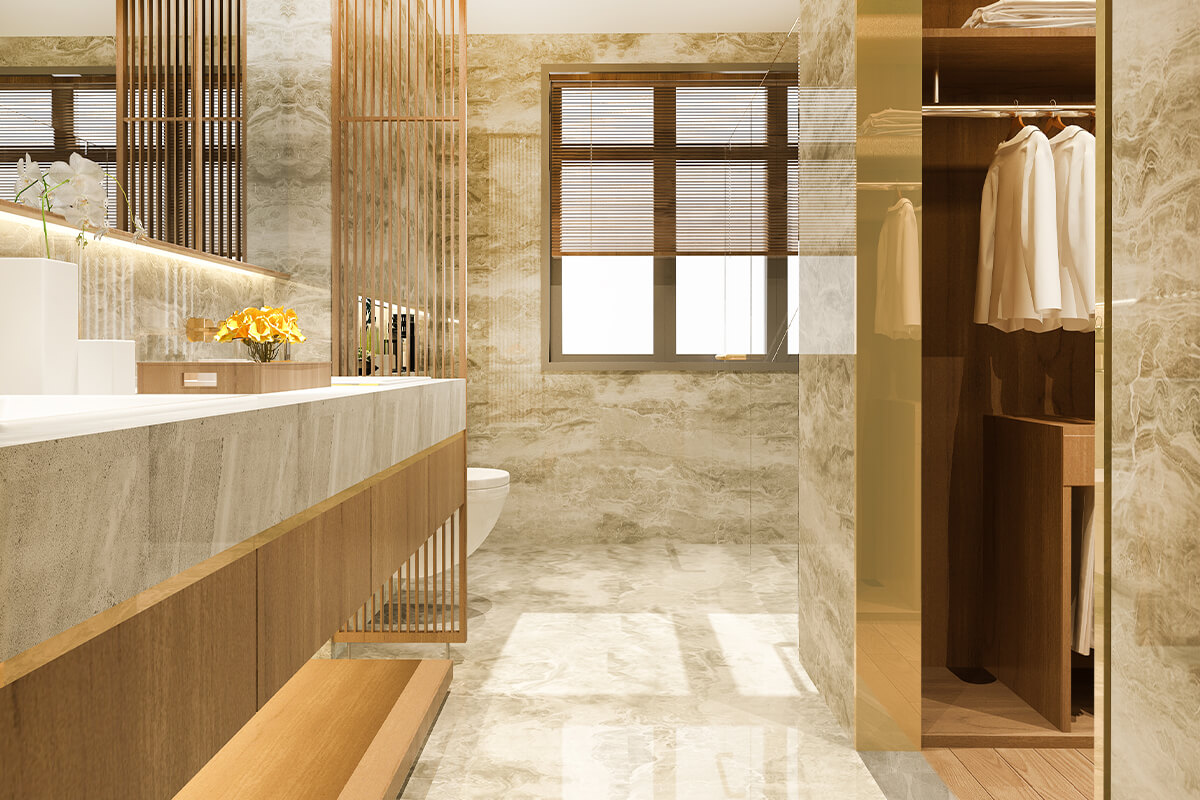
Reason 2: Water damage hides under your floor
The danger of water on a hardwood bathroom floor isn’t just what you can see, it’s what seeps down through the seams. Once moisture gets below the surface and into the subfloor, you often won’t notice the damage until boards start buckling or soft spots appear underfoot.
By that point, you’re typically looking at full replacement, not just refinishing. And because water damage often affects the subfloor too, the repair cost compounds quickly.
Hardwood floors installed by nail-down (the traditional method) can’t use a vapor barrier, because the nails would puncture it. Adhesive or click-together installs are better in theory, but no installation method makes hardwood truly waterproof.
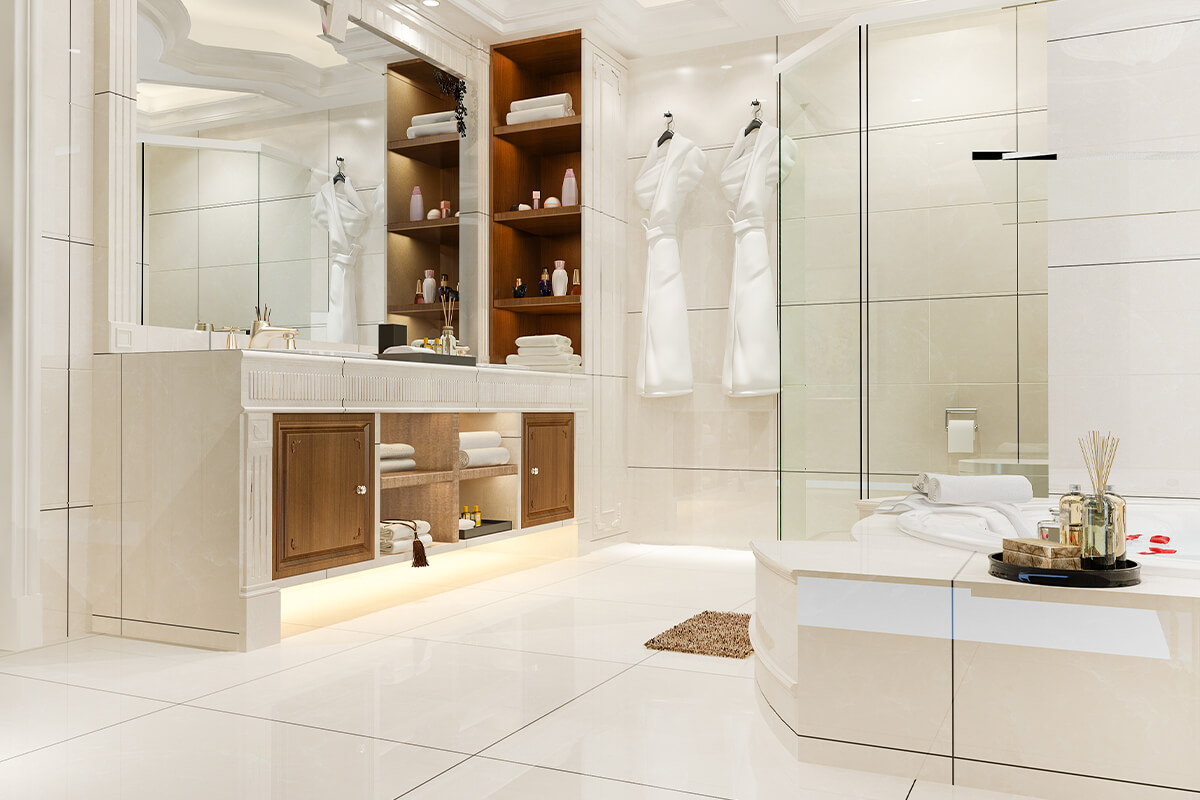
Reason 3: Mold grows under hardwood bathroom floors
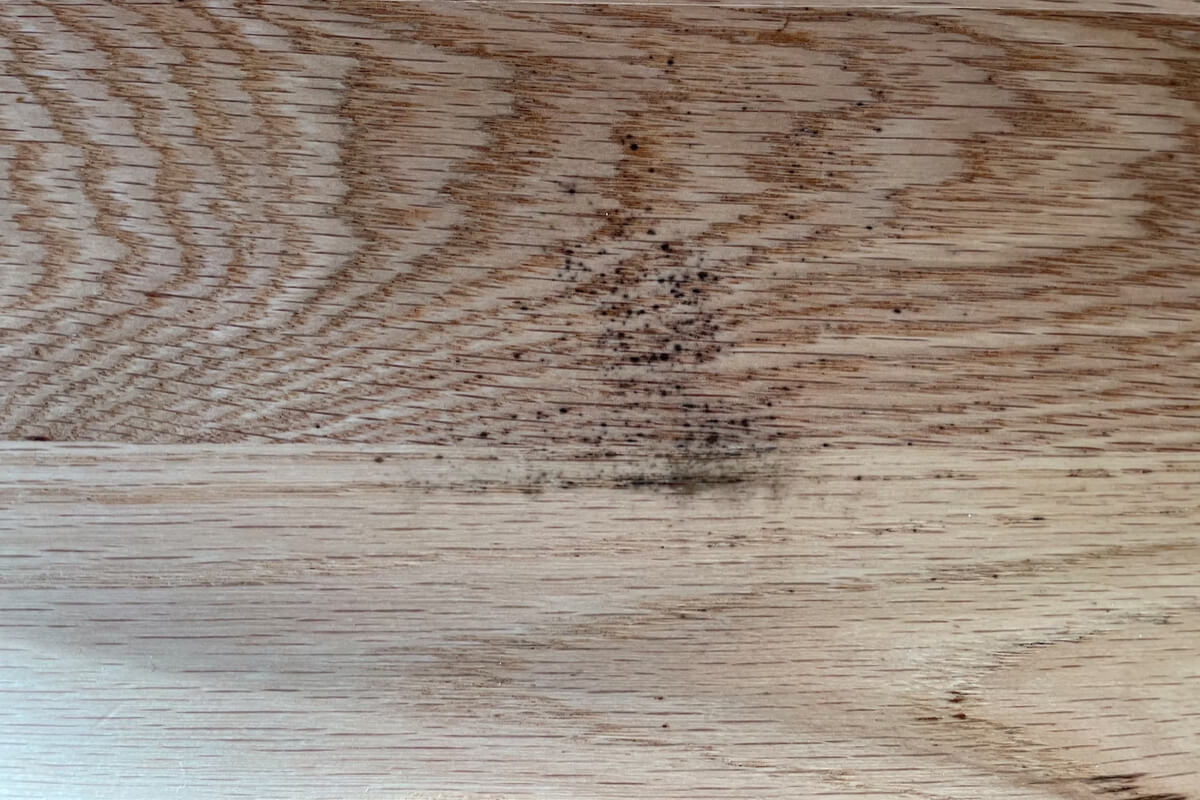
Bathrooms are the ideal environment for mold and mildew. Hardwood gives mold exactly what it needs: a natural surface that holds moisture, especially between boards and beneath the finish layer.
Once mold establishes itself under a hardwood floor, it’s not a cleaning problem, it’s a demolition problem. The floor comes out, the subfloor gets treated, and you start over. For homeowners with allergies or respiratory sensitivities, it’s also a health concern, not just a renovation one.
Pro tip: Signs of mold under your floor include a musty smell that doesn’t go away with cleaning, soft or spongy spots, and boards that seem to move when walked on. If you notice any of these, call a flooring professional before the damage spreads.
Reason 4: Most hardwood warranties don't cover bathroom damage
Here’s something most homeowners don’t find out until after they’ve installed hardwood in a bathroom: most manufacturers void the warranty in high-moisture environments.
The warranty language typically defines the floor as “moisture-resistant”, meaning you must wipe it dry immediately after any contact with water. Any damage from humidity, steam, or standing water is excluded. That means the floor you paid $10–$15 per square foot to install (plus labor) has no protection the moment it’s in a bathroom.
Reason 5: Maintenance hardwood needs in a bathroom is unrealistic for most homes
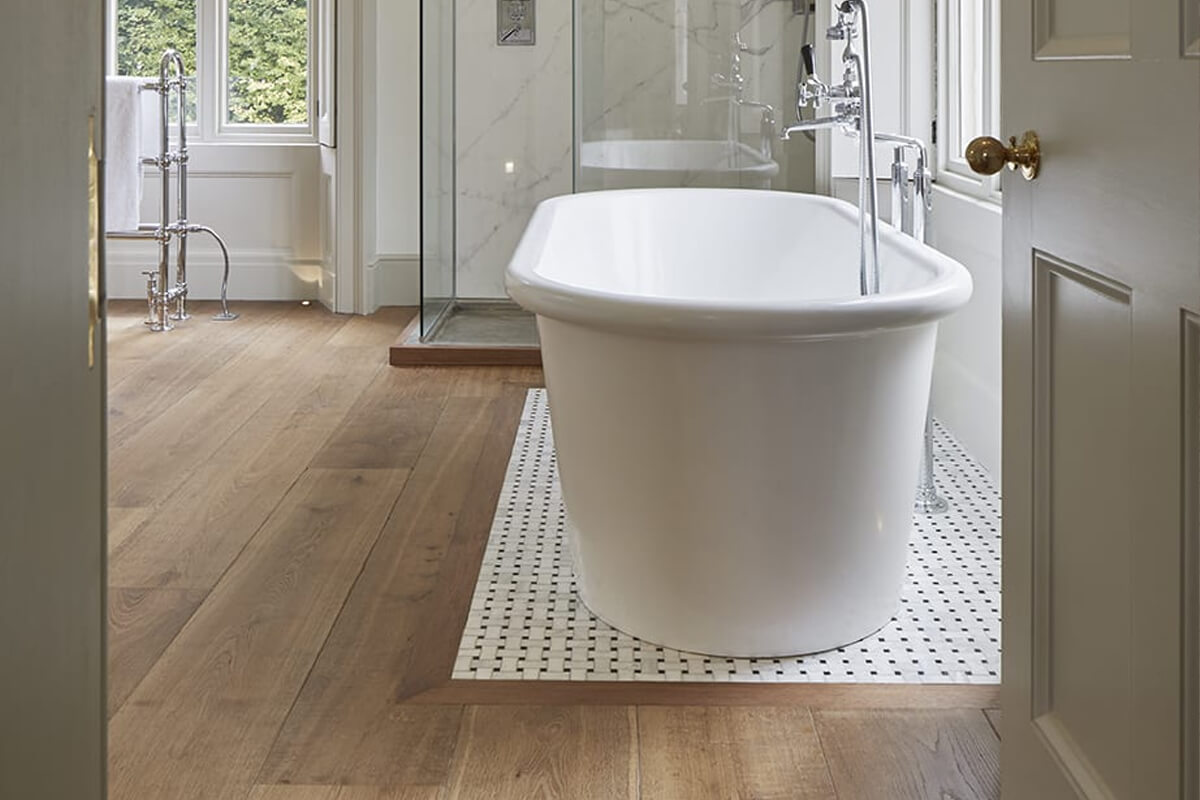
Protecting hardwood in a bathroom requires a level of maintenance that most households simply won’t sustain long-term. We’re not saying it’s impossible, we’re saying it’s a full-time job:
- Reapply finish every few months (test it by dropping water, if it beads, you’re okay; if it soaks in, reapply immediately)
- Wipe up any water within minutes of contact, every single time
- Use bath mats with rubber or vinyl backing that won’t trap moisture against the floor
- Hang wet towels immediately, never leave them on the floor
- Maintain plumbing fixtures to prevent slow leaks or condensation drips
- Run the exhaust fan during and after every shower
Is Hardwood Ever Okay in a Bathroom?
If you’re committed to the look of wood in a bathroom, a powder room or half bath is a reasonable place to use it. Without a shower, the humidity stays far lower, and the risk drops significantly.
In this case, engineered hardwood is a better choice than solid, its layered construction handles humidity fluctuations more gracefully. Pair it with a high-quality polyurethane or water-based finish, ensure good ventilation, and use mats near the sink.
We install hardwood in powder rooms regularly at Classic Flooring Solutions. It’s a beautiful touch in the right setting, we just want the setting to be right before we spec it.
Let's talk about your floor
Contact our team and we’ll walk your space, assess your subfloor, and give you a detailed estimate with options, no obligation.
What should St. Louis homeowners use instead?
The good news is that you don’t have to sacrifice the look of wood to get a bathroom floor that actually performs. Here’s how your main options compare:
| Flooring type | Waterproof | Looks like wood | Maintenance | Cost / sq ft | Best for |
|---|---|---|---|---|---|
| Solid hardwood | No | Yes | High | $8–$15 | Living rooms, bedrooms |
| Engineered hardwood | Partial | Yes | Medium | $5–$12 | Powder rooms only |
| LVP / LVT | Yes | Great | Low | $2–$7 | Full baths, all areas |
| Porcelain / ceramic tile | Yes | Wood-look | Low | $3–$10 | Full baths, showers |
| Natural stone | Needs seal | No | Medium | $10–$25 | High-end baths |
Luxury Vinyl Plank (LVP):
Our most-recommended option for full bathrooms. Today’s LVP is 100% waterproof, durable enough for commercial wear, and the print layer is so realistic that guests often can’t tell the difference. It’s also warmer underfoot than tile, a real advantage in Missouri winters. We install LVP throughout the St. Louis area and it holds up beautifully in high-traffic bathrooms.
Wood-Look Porcelain Tile:
The gold standard for moisture resistance. A wood-look porcelain plank tile gives you the grain and warmth of hardwood with zero water risk. It’s a more permanent install, harder underfoot, and benefits from radiant heat if you’re planning that upgrade.
Engineered Hardwood (Powder Rooms Only):
For the homeowner who truly wants real wood, engineered hardwood in a powder room is a defensible choice. Just don’t use it in a full bath.
Pro tip: Visiting our showroom at 10793 Midwest Industrial Blvd, St. Louis? We keep LVP and tile samples on hand in a range of wood-look finishes. Bring your bathroom photos and we’ll narrow it down.
What should you ask your St. Louis flooring company?
If you’re planning a bathroom renovation in the St. Louis area, whether in Clayton, Kirkwood, Webster Groves, Ladue, or anywhere in the metro, the flooring conversation matters before demo day. A few questions worth asking your contractor or flooring installer:
- Is the subfloor level and dry? (Critical for any bathroom floor, especially LVP)
- Is there a moisture barrier specified in the installation plan?
- What’s the wear layer on the LVP? (Look for 12 mil or higher for bathrooms; 20 mil+ for heavy traffic)
- Does the tile spec include Schluter or similar edge and waterproofing systems?
- What’s covered under the installation warranty?
At Classic Flooring Solutions, we review every bathroom project at the spec stage, before we ever pull a board. It’s how we catch problems before they become RFIs or callbacks.
Let's talk about your floor
Contact our team and we’ll walk your space, assess your subfloor, and give you a detailed estimate with options, no obligation.
What Do Homeowners Ask Most About Bathroom Flooring?
Some situations are beyond what sanding and refinishing can fix. If mold has established itself in the wood or subfloor, the contaminated material has to come out, there’s no finish that seals over an active mold colony. If boards have buckled severely and dried in a distorted position, they won’t sand flat. And if the subfloor has delaminated or softened, no flooring installation on top of it will hold long-term.
Partial replacement, pulling the damaged boards and weaving in new ones, is also a legitimate middle path for localized damage. In St. Louis homes with strip oak flooring (common in houses built between 1900 and 1960), a skilled installer can weave new boards into the existing pattern and stain-match them so the repair is nearly invisible.
Common questions about bathroom flooring?
Can you ever use hardwood in a bathroom?
In a powder room (no shower, no tub), engineered hardwood can work with proper sealing and ventilation. We don't recommend it for full bathrooms with showers.
What is the best flooring for a St. Louis bathroom?
For most St. Louis homes, LVP or porcelain tile are the go-to choices. They handle Missouri's seasonal humidity swings without warping or gapping, a real issue with wood in this climate.
Does LVP look as good as real hardwood in a bathroom?
Today's luxury vinyl plank is remarkably close. The print layer has improved dramatically, you get realistic grain, texture, and color variation without the moisture risk.
What happens if my hardwood bathroom floor gets water damage?
Wood-look porcelain tile or LVP are the two best routes. Both mimic the grain and warmth of real wood while staying 100% waterproof. We can show you samples at our St. Louis showroom.
Should you use hardwood in your bathroom?
Hardwood in the bathroom is a beautiful idea that doesn’t survive contact with reality, at least not in a full bath. The moisture, the maintenance, the voided warranties, and the hidden damage risk make it a poor long-term investment, no matter how good it looks on day one.
LVP and wood-look tile give you the warmth and character of wood without any of the risk. If you want real wood and have a powder room to work with, engineered hardwood in that specific setting is worth a conversation.
We’re a St. Louis flooring company that’s been doing this for three generations. If you have a bathroom project, we’re happy to talk through the options and give you a straight answer.